Quick verdict
ProxyEmpire is worth considering if you need a real proxy workflow, not just a browser privacy tool or a cheap one-off IP address.
Proxy tools can look simple from the outside: choose a location, copy an endpoint, run traffic. In practice, the buying decision depends on proxy type, target website behavior, location depth, session length, bandwidth use, protocol support, and whether the provider works with your exact stack.
ProxyEmpire’s strongest fit is a test-first buyer who needs several proxy categories under one roof. The current public product positioning covers rotating residential, static residential, rotating mobile, dedicated mobile, unlimited residential, and rotating datacenter paths. That gives it a broad middle-ground appeal for data collection, SEO monitoring, ad verification, price monitoring, localized browsing checks, and developer workflows.
The main caution is commercial risk. ProxyEmpire does not present the entry path as a free trial. The safer first step is its low-cost paid trial, then a real workflow test, then a plan decision. I would not buy a larger package just because the pricing table shows a visible promo path. A discount can improve the purchase, but it should not be the reason you choose the wrong proxy category.
For my money, ProxyEmpire makes sense when you can answer one question clearly: “Which proxy type do I need, and can I prove it works before I scale bandwidth?” If the answer is still fuzzy, slow down and compare alternatives first.
Next step: If ProxyEmpire still fits your proxy workflow, verify the current buyer route before choosing bandwidth.
Review snapshot
| Review point | Practical take |
|---|---|
| Best for | Data teams, SEO teams, ad verification workflows, price monitoring, and developers testing proxy routes |
| Not ideal for | Casual private browsing, buyers needing a free trial, or teams that cannot accept non-refundable proxy spend |
| Main use case | Testing and scaling residential, mobile, static, or datacenter proxy workflows |
| Entry path | Paid trial, not a verified free plan |
| Pricing style | Product-specific and bandwidth-based, with different routes for residential, mobile, dedicated mobile, and datacenter access |
| Main strength | Broad proxy type coverage with useful targeting and integration options |
| Main concern | Refund limits, bandwidth fit, target-site behavior, and promo applicability need live verification |
| Direct alternatives | Instant Proxies, ProxyScrape, Luminati/Bright Data route |
| Best next step | Run a small real workflow test before buying larger bandwidth |
What is ProxyEmpire?
ProxyEmpire is a proxy network provider for buyers who need to route traffic through residential, mobile, ISP/static residential, or datacenter proxy infrastructure.
In plain English, it helps a user or tool appear to connect from different IP types and locations. That can matter for public data collection, SERP checks, localized website testing, ad verification, price monitoring, app or browser testing, and other workflows where location and IP type affect results.
It is not a magic scraping guarantee. It is not a compliance shield. It is not the same as a free VPN. It is also not the first thing I would recommend to someone who only wants basic private browsing. ProxyEmpire becomes more interesting when the buyer needs a configurable proxy setup and is prepared to test it properly.
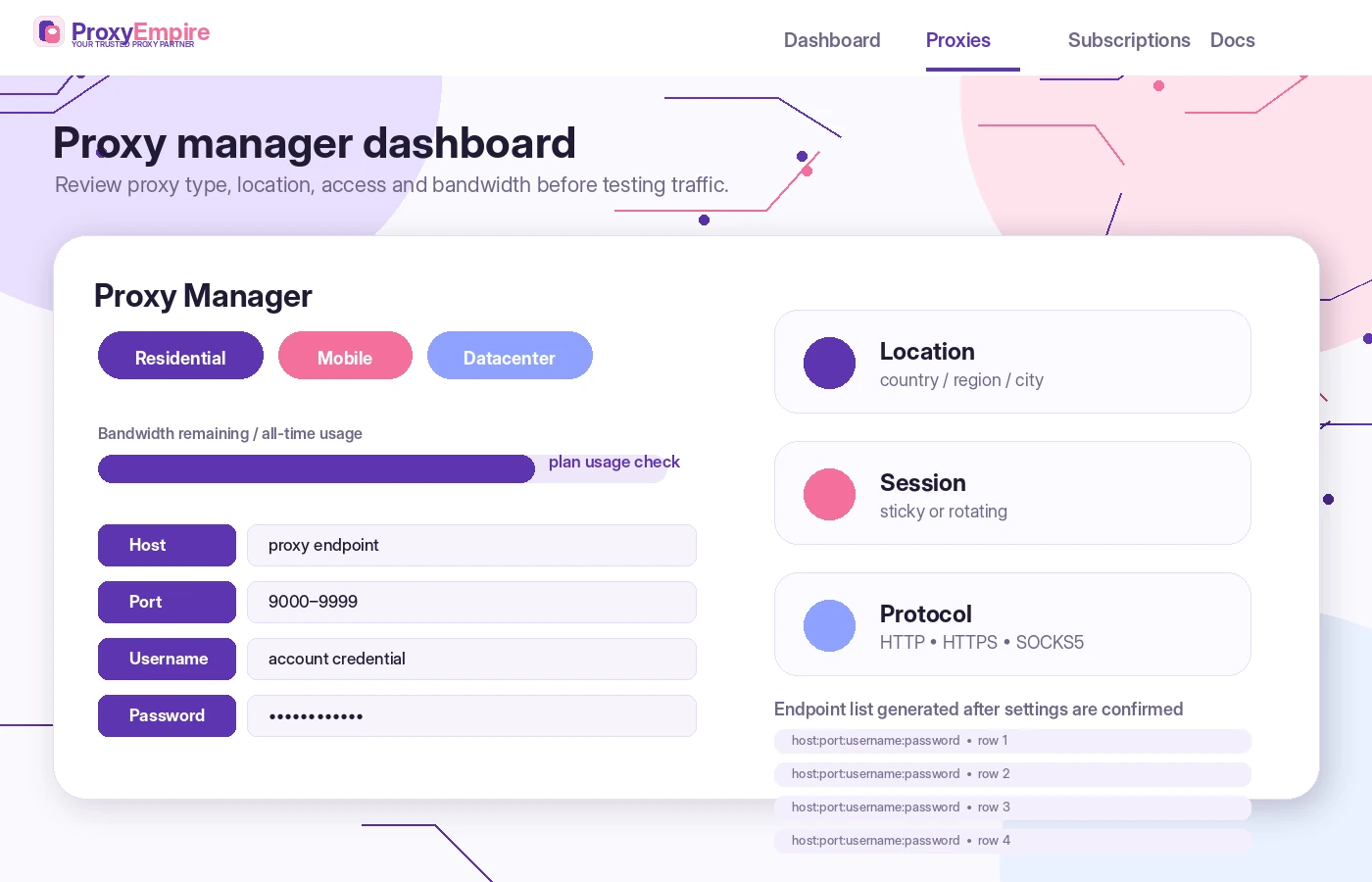
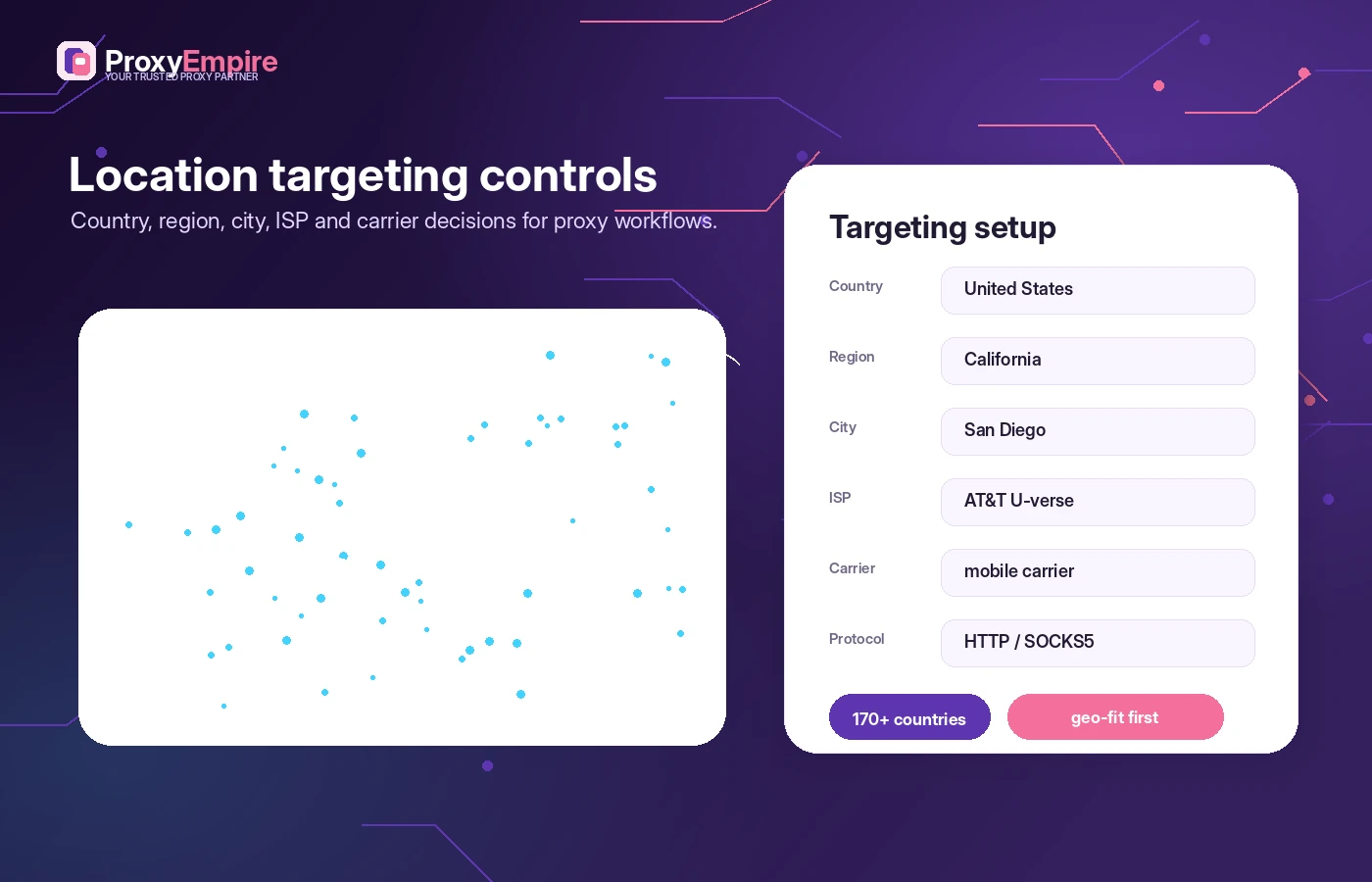
The homepage currently presents ProxyEmpire around global residential, mobile, and datacenter proxy coverage, supported protocols, advanced geo-targeting, session control, a Chrome extension, and API-oriented setup. Its docs also show that targeting depth varies by proxy type. Rotating residential and rotating mobile proxies support deeper targeting such as country, region, city, ISP, and carrier. Static residential, dedicated mobile, and datacenter paths have different targeting boundaries.
That is the first buyer lesson: do not evaluate ProxyEmpire as one product. Evaluate it as several proxy buying paths inside one vendor.
Our review approach compares public product pages, pricing details, help documentation, deal terms, buyer workflow fit, and nearby alternatives. We do not treat a visible discount, low paid trial, or attractive price per GB as proof that the product fits the buyer.
Who should use ProxyEmpire?
ProxyEmpire makes the most sense for buyers with a real proxy job to complete.
A data collection team may consider it if they need residential or datacenter proxies for lawful public data workflows. The condition is that the team can test real target sites during the trial. A proxy that connects successfully but fails on the target source is still the wrong purchase.
An SEO team may use ProxyEmpire for localized SERP checks, ranking visibility tests, regional page checks, or geo-specific monitoring. This only works if the required countries, cities, or ISP-level targeting options match the workflow. I would verify the target region first, not after buying a larger data package.
An ad verification or price monitoring buyer may find value when regional presentation matters. In that case, static behavior, rotation rules, location accuracy, and bandwidth consumption are more important than the cheapest visible plan.
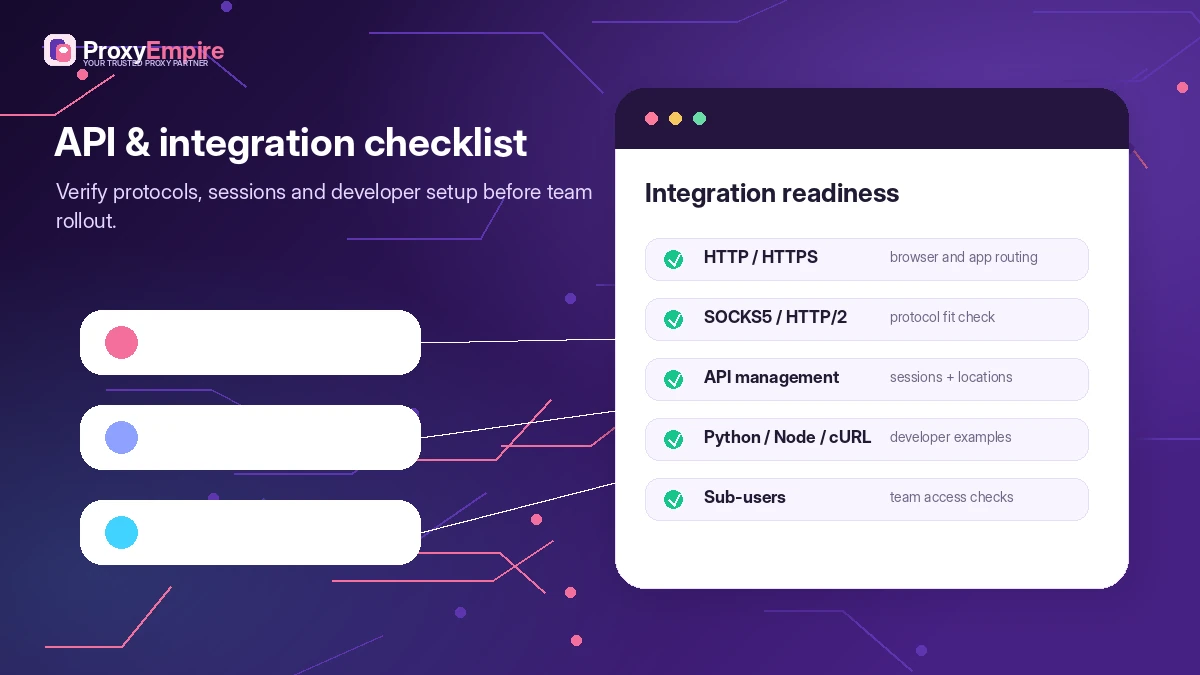
A developer may consider ProxyEmpire if the workflow needs HTTP, HTTPS, SOCKS5, HTTP/2, API access, endpoint control, or integration with scripts and browser tools. The condition is technical: test authentication, rotation, session behavior, and bandwidth tracking before scaling.
A small to mid-sized business may also fit if it wants a self-service proxy vendor rather than a full enterprise procurement process. The risk is assuming that self-service means simple. Proxy buying is still a technical and operational decision.
Who should avoid ProxyEmpire?
I would avoid ProxyEmpire if you only need a casual proxy for occasional browsing. The product range is broader than that, and the buyer may end up paying for complexity they do not use.
I would also be careful if you require a completely free trial. ProxyEmpire’s safer test route is paid, even though the entry cost is low. That is not automatically bad, but it changes the expectation. You are not evaluating a no-payment freemium tool.
Teams with strict refund requirements should slow down. The public refund language is not generous for standard payments. If your organization needs the ability to reverse a purchase after poor fit, ProxyEmpire’s trial-first model may still feel risky.
Large enterprise teams should compare it with heavier proxy ecosystems before committing. ProxyEmpire has useful breadth, but buyers that need deep procurement, large-scale governance, dedicated account structures, compliance documentation, or enterprise-grade proxy tooling may need a broader vendor evaluation.
Finally, buyers who are only chasing a visible coupon path should pause. Proxy categories are not interchangeable. A promo on one proxy type does not prove that your target use case, region, session behavior, or tool stack will work.
The easy mistake is buying the discounted proxy type instead of the correct proxy type. The better way to judge ProxyEmpire is to decide the workflow first, then test the smallest safe version of that workflow.
How ProxyEmpire fits into a real workflow
A practical ProxyEmpire workflow starts before checkout.
First, define the job: local SERP checks, price monitoring, ad verification, scraping, browser profiles, or app testing. That answer determines whether you should test residential, mobile, static residential, dedicated mobile, or datacenter proxies.
Second, choose the target region and connection behavior. Rotating residential may fit broad data collection, static residential may fit longer sessions, mobile may fit carrier-sensitive checks, and datacenter may fit cheaper lower-friction tasks.
Third, test the actual destination, tool, location, and request pattern. Then measure success rate, blocks, CAPTCHAs, latency, location accuracy, session stability, and bandwidth consumed before deciding whether to scale.
Workflow check: If you already know the proxy type you need, start with the smallest realistic test before choosing larger bandwidth.
Real-world buyer scenarios
A small SEO team checking regional results
An SEO team may use ProxyEmpire to check how search results, landing pages, or local content appear from different regions. The fit depends on whether the required country, city, ISP, or carrier route is available and whether the test does not consume more bandwidth than expected.
A developer building a public data workflow
A developer should care less about homepage claims and more about endpoint format, authentication, protocol support, rotation behavior, API access, and usage tracking. ProxyEmpire is more useful when those pieces work inside the real script, browser profile, or automation stack.
An ad verification or market research buyer
Ad verification and market research workflows often depend on location, device-like behavior, and repeatability. ProxyEmpire can fit, but buyers should confirm target-platform rules and internal compliance limits before scaling traffic.
A casual user comparing cheap proxy options
A casual user may see the entry price and assume ProxyEmpire is an easy bargain. That may be the wrong lens. ProxyEmpire is more defensible when proxy type, location targeting, and bandwidth control actually matter.
Key features that actually matter
Multiple proxy categories
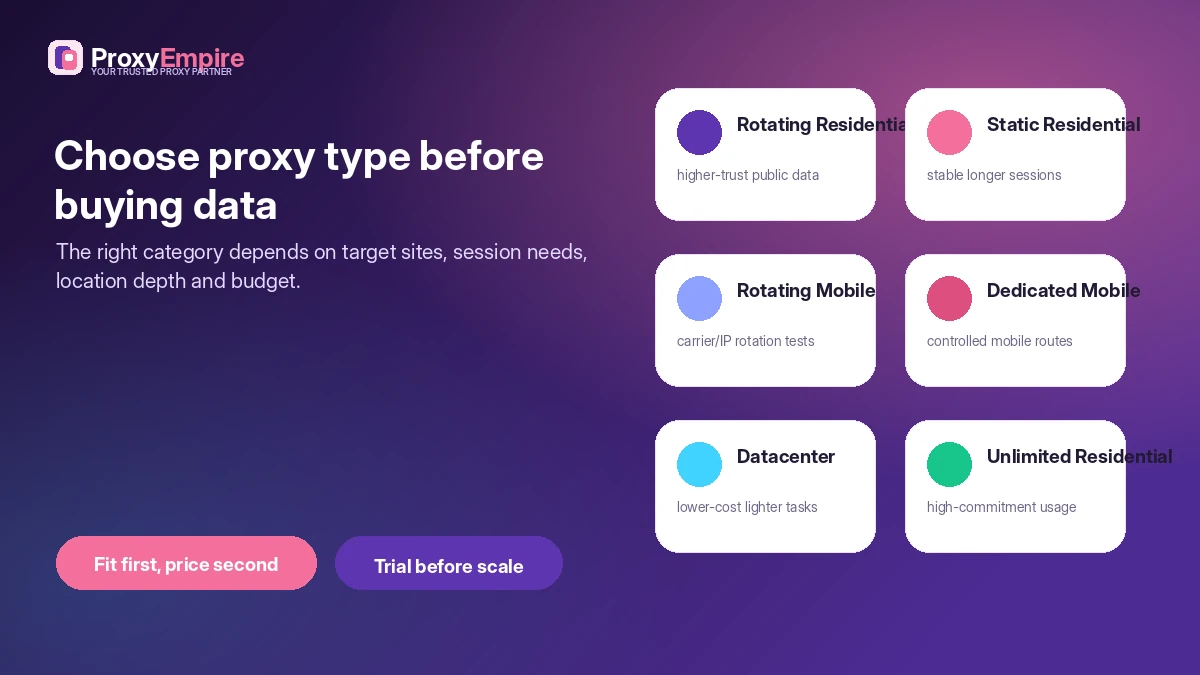
ProxyEmpire’s biggest practical strength is the range of proxy products. Rotating residential, static residential, rotating mobile, dedicated mobile, unlimited residential, and rotating datacenter routes all point to different buyer jobs.
That matters because proxy buying is not only about price. It is about matching IP type to target difficulty, session length, region, and budget.
Buyer note: decide the proxy category before comparing prices. A cheap datacenter plan does not solve the same problem as a residential or mobile proxy route.
Geo-targeting depth
ProxyEmpire’s targeting story is strongest for rotating residential and rotating mobile use cases. Country, region, city, ISP, and carrier targeting can matter for localized testing, ad verification, SEO monitoring, and regional data workflows.
Where it may disappoint: targeting is not identical across every proxy type. Static residential, dedicated mobile, and datacenter routes have different targeting limits.
Buyer note: verify the exact targeting options for the proxy product you plan to buy, not the broadest targeting claim on the homepage.
Protocol and integration flexibility
ProxyEmpire supports common proxy protocols and developer-friendly setup paths. That matters for buyers using scripts, browser profiles, automation tools, or custom dashboards.
The value is not in having a long list of technologies. The value is whether your tool can connect cleanly, rotate correctly, authenticate reliably, and monitor usage without creating support friction.
Buyer note: test your real stack during the paid trial. Do not assume a successful browser test proves that your scraper, API workflow, or multi-account environment is ready.
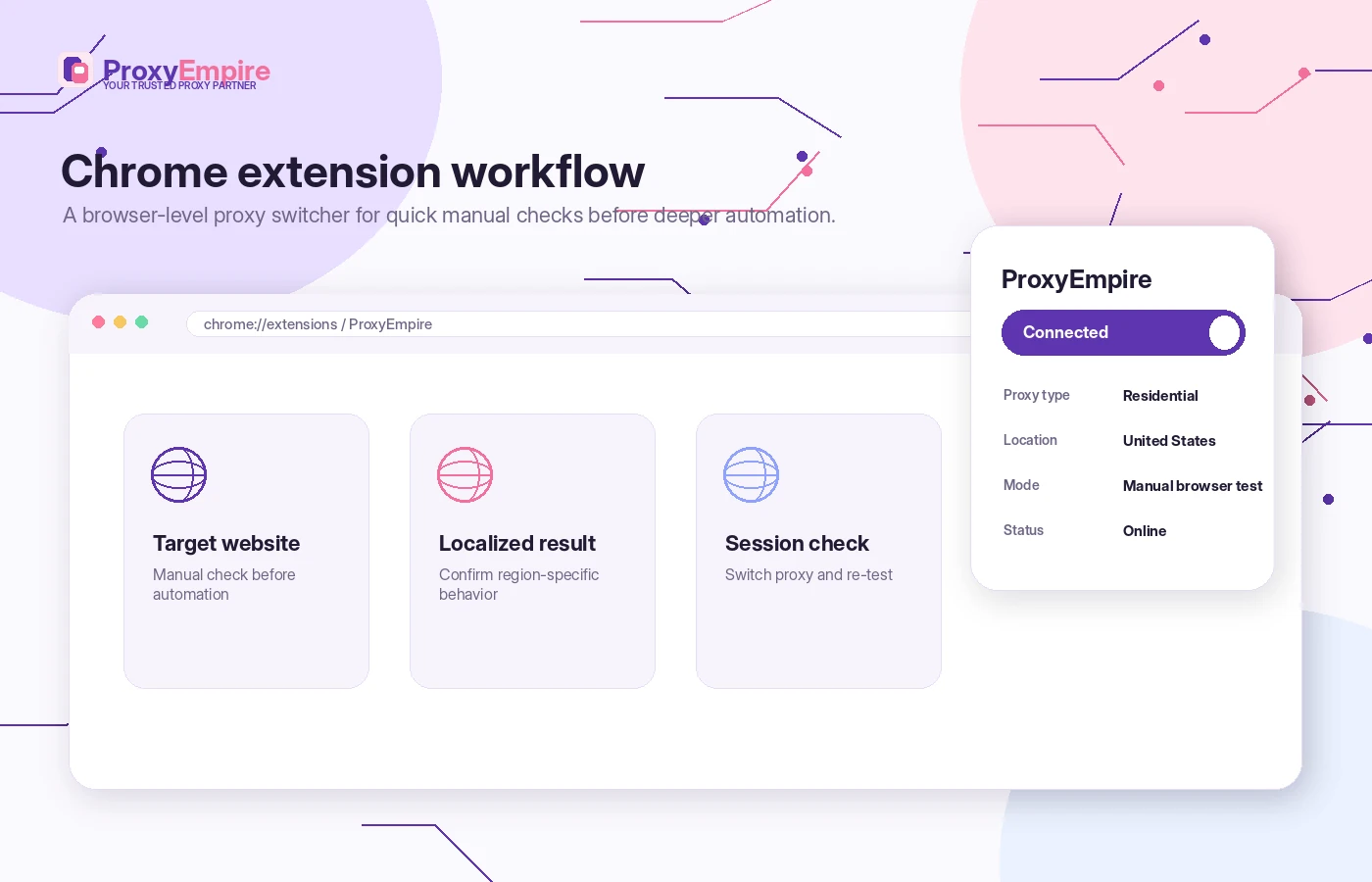
Chrome extension and manual testing path
The Chrome extension can be useful for browser-level testing, quick location checks, and manual workflows. It gives less technical buyers a way to test without building an entire integration first.
Where it may disappoint: browser-level convenience is not the same as production readiness. A team that needs automation, concurrency, reporting, or API-managed usage should not stop at the extension.
Buyer note: use the extension to validate simple manual flows, then test the deeper integration separately if the project will scale.
Paid trial as a safety checkpoint
The paid trial is one of ProxyEmpire’s most important buying features because the refund policy makes testing more important. It gives the buyer a smaller route to test residential and mobile data before committing to larger spend.
Where it may disappoint: the trial data is limited. It may be enough to confirm setup and a few target tests, but it may not prove large-scale economics.
Buyer note: plan the trial before starting it. Know the target sites, locations, proxy type, test volume, and success criteria before you spend the first request.
Pricing and plan value
ProxyEmpire pricing needs to be read by product category, not as one universal price list.
At the time of review, the public pricing table showed a paid trial entry path and separate pricing for rotating residential, static residential, rotating mobile, dedicated mobile, and rotating datacenter proxies. It also displayed a limited-time promo presentation on selected rotating categories. I would treat those visible discounts as checkout details to verify, not as evergreen pricing facts.
That range is useful, but it also creates buying risk. Residential price per GB, mobile price per GB, static residential IP fees, dedicated mobile monthly packages, and datacenter testing plans are not equivalent decisions.
The paid trial is the cleanest first step for most buyers. ProxyEmpire’s refund help page says it does not offer a free trial, and describes the trial as a small paid test with limited residential and mobile data. That is enough to check fit, not enough to casually assume long-term value.
Annual or larger-commitment thinking should come later. I would not scale into a larger bandwidth purchase until the trial proves target access, session behavior, location accuracy, and bandwidth consumption.
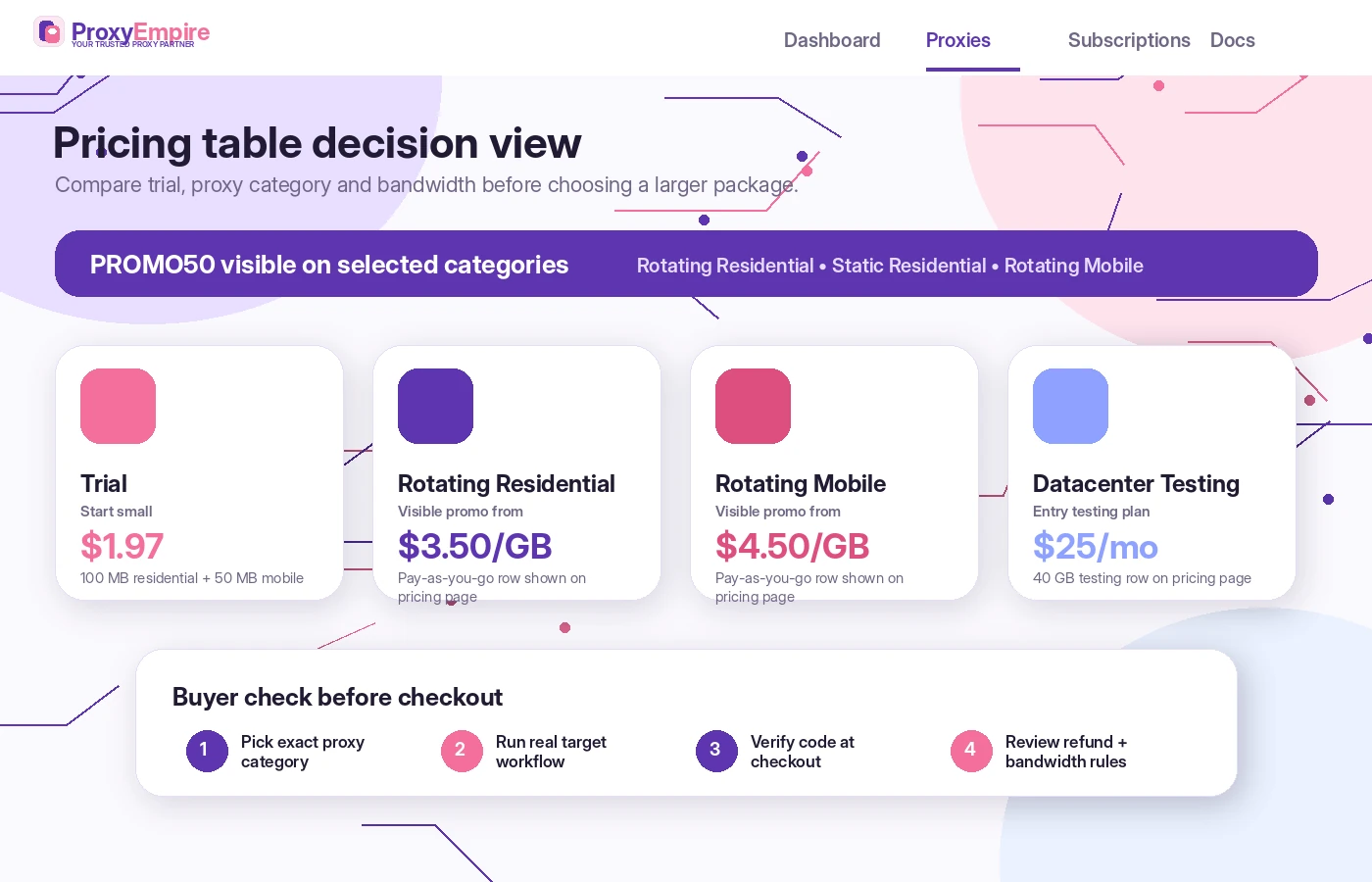
Pricing check: Compare the exact proxy category first, then verify the current plan, trial, and offer path before checkout.
Check ProxyEmpire pricing Check current offers Read store guide
Free plan, trial, coupon, and checkout notes
No verified free plan or completely free trial was clear from the current public materials. The entry safety step is a paid trial.
That is not automatically a deal-breaker. In proxy buying, a tiny paid test can be more useful than a vague free tier that does not allow meaningful traffic. But buyers should understand what the trial is for: it is a proof step, not a complete production evaluation.
The coupon path should come after workflow fit. ProxyEmpire’s public pricing table may show a visible code or discount path for selected categories, but that does not mean every proxy product, dedicated mobile package, datacenter route, custom plan, or future checkout will behave the same way.
I would use this order:
- Choose the proxy category.
- Check targeting and protocol fit.
- Run the paid trial against real targets.
- Estimate bandwidth from the test.
- Verify the live pricing and current offer path.
- Buy only the smallest plan that matches the proven workflow.
The trial is the safety mechanism. The coupon page is a savings check. Do not reverse them.
What I would check before buying ProxyEmpire
If I were buying ProxyEmpire for a real workflow, I would check these points before paying for more bandwidth:
- Whether the target sites work with the selected proxy type during a real test.
- Whether the required country, city, ISP, or carrier targeting is available for that exact proxy product.
- Whether the workflow needs rotating, static, dedicated mobile, or datacenter behavior.
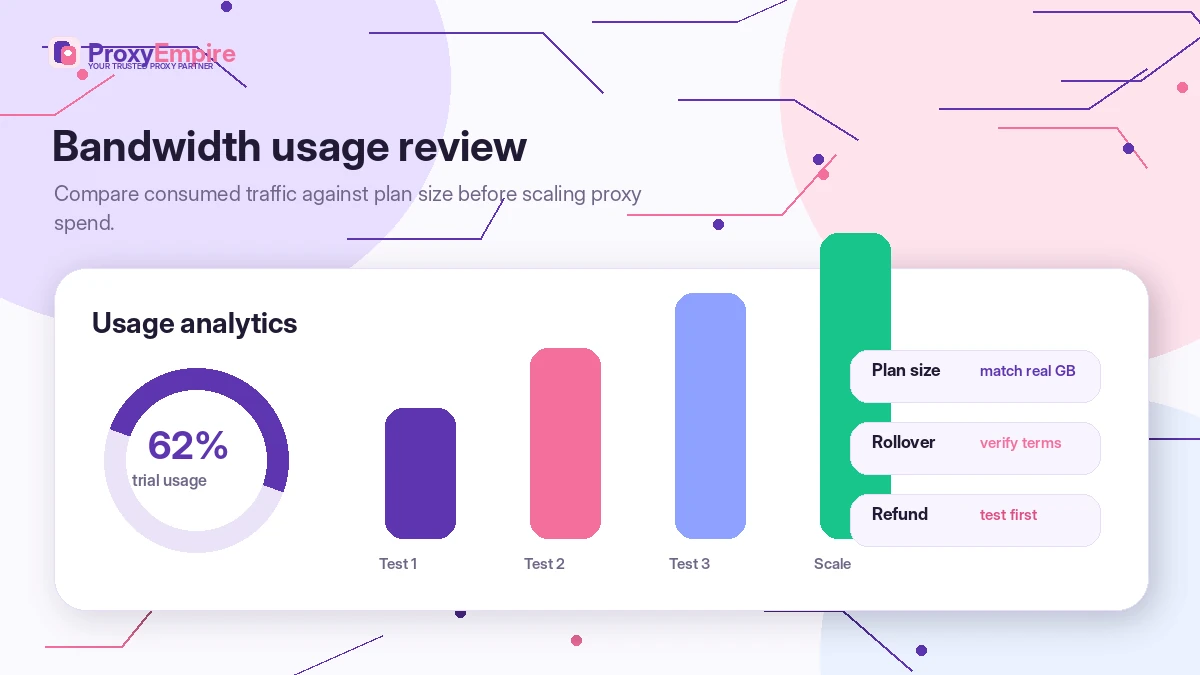
- How much bandwidth the test consumes under realistic request volume.
- Whether unused bandwidth, rollover, expiration, and account rules match the project timeline.
- Whether refund and cancellation terms are acceptable before moving beyond the trial.
- Whether a visible offer applies to the selected product at checkout without changing the plan fit.
A simple test before paying
Before choosing a larger ProxyEmpire plan, I would run a small test like this:
- Pick one real target workflow, not a generic connection test.
- Choose the proxy type that matches the target difficulty: residential, mobile, static, dedicated mobile, or datacenter.
- Select the exact country, city, ISP, or carrier requirement if the workflow needs it.
- Run enough traffic to measure blocks, CAPTCHAs, latency, session behavior, and bandwidth use.
- Test the same workflow in the browser or script where you will actually use it.
- Record whether the result is usable, not merely connected.
- Estimate monthly data needs before checking current offers or scaling the plan.
The goal is not to prove that ProxyEmpire is perfect. The goal is to avoid a larger non-refundable purchase based on guesswork.
Pros explained
The first pro is coverage. ProxyEmpire gives buyers several proxy routes inside one vendor, which helps teams compare residential, mobile, static, and datacenter workflows without starting from scratch each time.
The second pro is the paid trial. It is not free, but it gives buyers a smaller way to test real target fit before spending more. In a category where performance depends heavily on destination sites, that matters.
The third pro is targeting and integration depth. Country, region, city, ISP, carrier, protocol, API, and browser-level options can all matter once a proxy workflow moves beyond manual browsing.
The fourth pro is pricing visibility. ProxyEmpire’s public pricing table makes the first evaluation easier than quote-only vendors, even though checkout and offer terms still need verification.
Cons explained
The first con is refund risk. ProxyEmpire’s public refund language makes it clear that standard payments are not something buyers should assume they can reverse. That makes the trial mandatory in practice.
The second con is that the trial is paid and limited. A low trial cost is useful, but buyers expecting a free plan may be disappointed.
The third con is pricing complexity. Mobile, datacenter, static residential, and rotating residential plans should be compared within their own category because the cheapest visible number can point to the wrong product.
The fourth con is enterprise fit. ProxyEmpire has useful tools, but larger organizations may still need to compare bigger providers if procurement, compliance, account governance, or enterprise support depth matters.
Green flags and red flags
Green flags:
- You know the exact proxy type your workflow needs.
- You can test real target sites before scaling.
- You need location targeting, session control, and developer-friendly setup.
- Your team wants a self-service proxy provider with several product categories.
- The paid trial confirms success rate, bandwidth use, and target-region fit.
Red flags:
- You are buying only because the pricing table shows a visible offer.
- You cannot tolerate a non-refundable payment after testing.
- You do not know whether residential, mobile, static, or datacenter proxies fit the job.
- You need a deep enterprise procurement or governance process.
- Your use case may violate target-site rules, platform policies, or internal compliance standards.
ProxyEmpire vs alternatives
ProxyEmpire’s best comparison set depends on what the buyer is trying to solve. Do not compare proxy providers only by sticker price. Compare them by proxy type, target fit, support depth, bandwidth rules, and operational risk.
Instant Proxies vs ProxyEmpire
Instant Proxies is the cleaner comparison if the buyer wants a simpler proxy purchase path and does not need ProxyEmpire’s full residential, mobile, static, and datacenter mix.
ProxyEmpire may still make more sense when the workflow requires deeper targeting, multiple proxy categories, or a more flexible test-to-scale path.
ProxyScrape vs ProxyEmpire
ProxyScrape is worth comparing when budget and availability are the main concerns. A buyer who wants to test proxy access without a broad vendor evaluation may prefer that direction.
ProxyEmpire is stronger when the buyer needs a more structured paid trial, multiple proxy types, and clearer category-based buying decisions.
Luminati/Bright Data route vs ProxyEmpire
The Luminati/Bright Data route is more relevant for larger teams that need a heavier enterprise-grade proxy ecosystem, deeper platform tooling, or a more formal evaluation process.
ProxyEmpire may feel more approachable for small to mid-sized teams that want self-service access and do not need the full weight of an enterprise data collection platform.
Buzzy as an adjacent route
Buzzy is not a direct proxy network replacement. I would treat it as an adjacent data-workflow route only if the buyer is rethinking the broader system around data, automation, or business tooling.
It should not be compared as if it solves the same proxy job.
Trust, refund, and buyer-risk notes
ProxyEmpire has enough public information to evaluate seriously, but the buyer still needs to stay careful.
The official pages provide a clear product range, pricing table, paid trial language, targeting docs, and refund page. That is a good starting point. Proxyway’s independent review frames ProxyEmpire as a stable generalist for small to mid-sized projects, which matches the way I would approach it: useful, but not automatically best for every proxy job.
Trustpilot sentiment appears mostly positive, especially around support, but public review platforms are not a substitute for your own target-site test. A proxy can have happy customers and still fail your exact destination, region, or automation pattern.
Refund terms are the biggest buyer-protection issue. If standard payments are non-refundable, the trial becomes the decision gate. I would treat any larger purchase as something you make only after the trial produces real evidence.
Data and compliance also matter. Proxy usage should stay within applicable laws, platform terms, and ethical data collection practices. If your workflow involves scraping, account management, ad verification, or automated browsing, check your internal policy and the target platform rules before scaling traffic.
The safest buyer mindset is simple: prove the workflow first, then choose bandwidth.
Final verdict
ProxyEmpire is a solid candidate if you need a flexible proxy provider for real data, SEO, ad verification, monitoring, or developer workflows and you are willing to test before scaling.
I would consider ProxyEmpire if you need multiple proxy categories, location targeting, protocol flexibility, and a low-cost way to test fit before buying more traffic. I would be especially interested if your team is small to mid-sized and wants a self-service proxy vendor without starting from a quote-only enterprise process.
I would skip it if you need a truly free trial, cannot accept non-refundable proxy spend, only need casual browsing, or are not ready to define the exact proxy type and target workflow.
I would compare it with Instant Proxies for simpler needs, ProxyScrape for budget proxy availability, and the Luminati/Bright Data route for heavier enterprise evaluation.
The short version: ProxyEmpire is not a product I would judge by a coupon path or a headline price per GB. I would judge it by whether the paid trial works against the exact targets you care about. If it does, scaling may make sense. If it does not, the cheapest visible offer will not fix the mismatch.