
Luminati Proxy Pricing & Data Team Fit
Luminati Proxy is best understood today as Bright Data's proxy and web data infrastructure heritage rather than a separate lightweight proxy seller. It fits buyers who need serious routing control, residential and datacenter coverage, proxy management, API access, and compliance-aware web data collection. It is not the easiest choice for someone who only wants a cheap static proxy for a small side task.
Fit → price → checkout
Use these routes after the official-site check: coupon first, review for fit, compare if unsure.
Luminati Proxy pricing snapshot
Fast commercial checks before pricing, coupons, or a deeper review.
Bright Data proxy tour
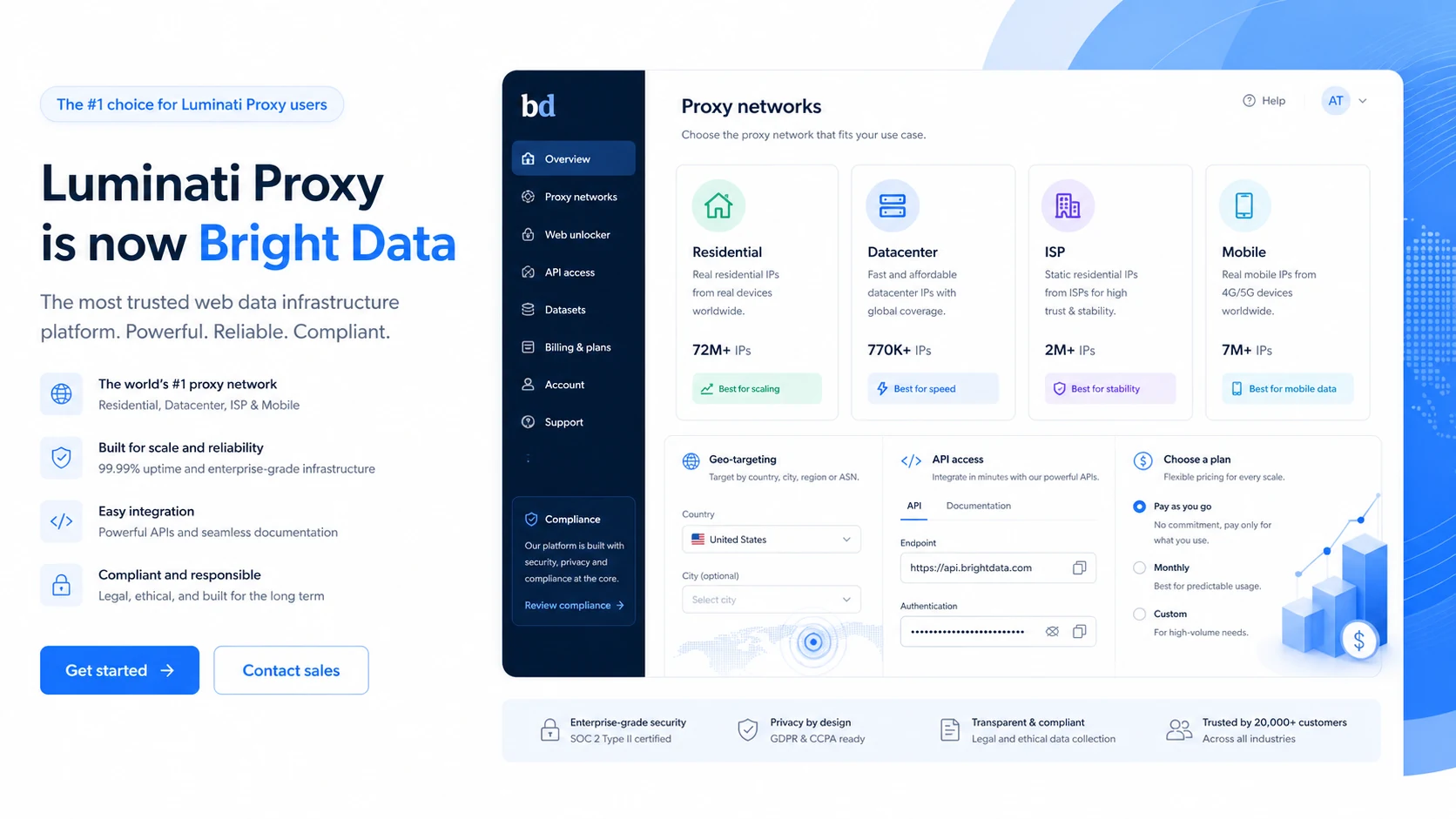
Use the tour assets to understand the current Bright Data environment behind the older Luminati name: the rebrand context, proxy pricing, residential zone setup, and Proxy Manager workflow. These are the screens that matter before a buyer treats the product as a simple proxy purchase.
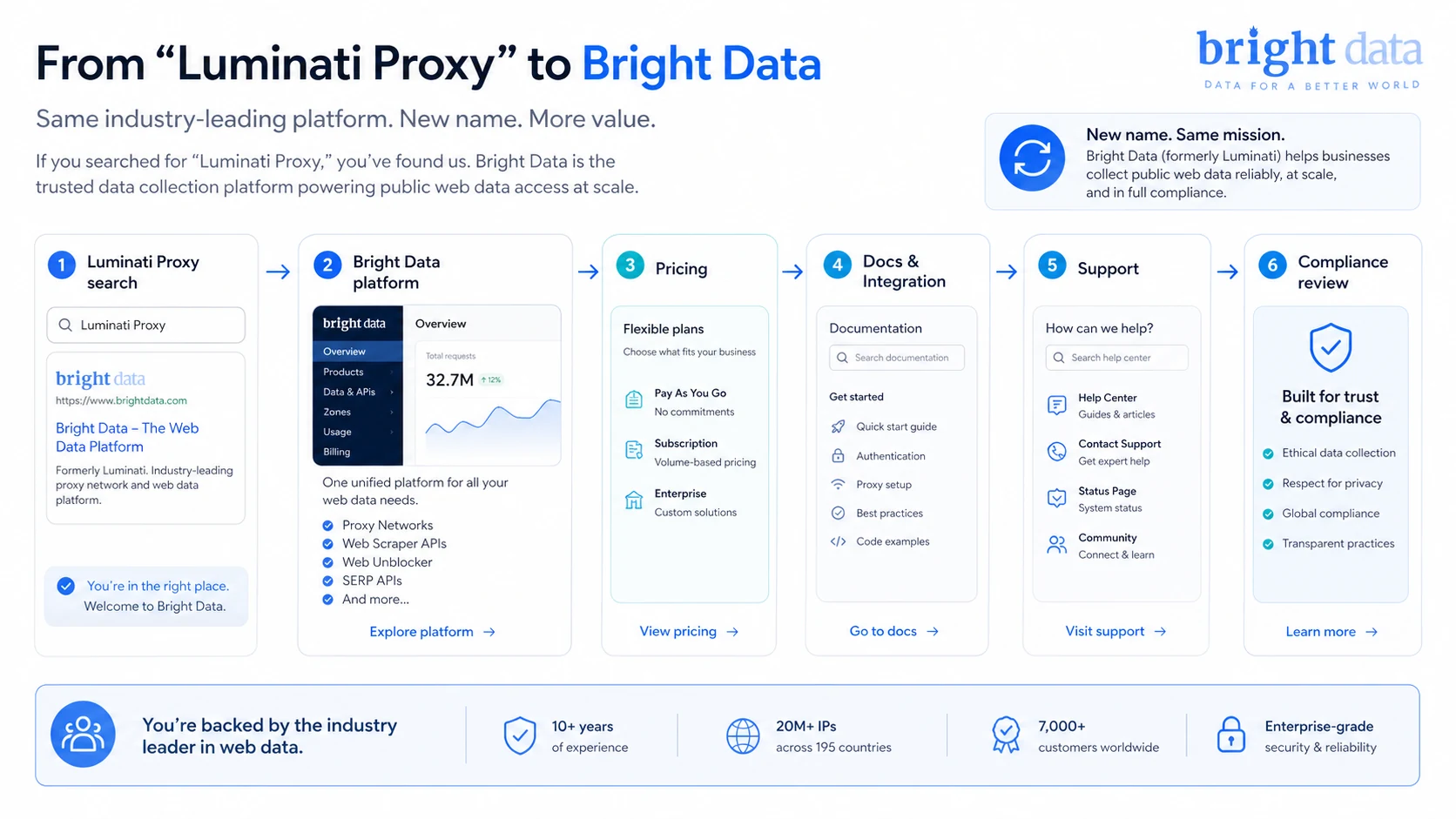
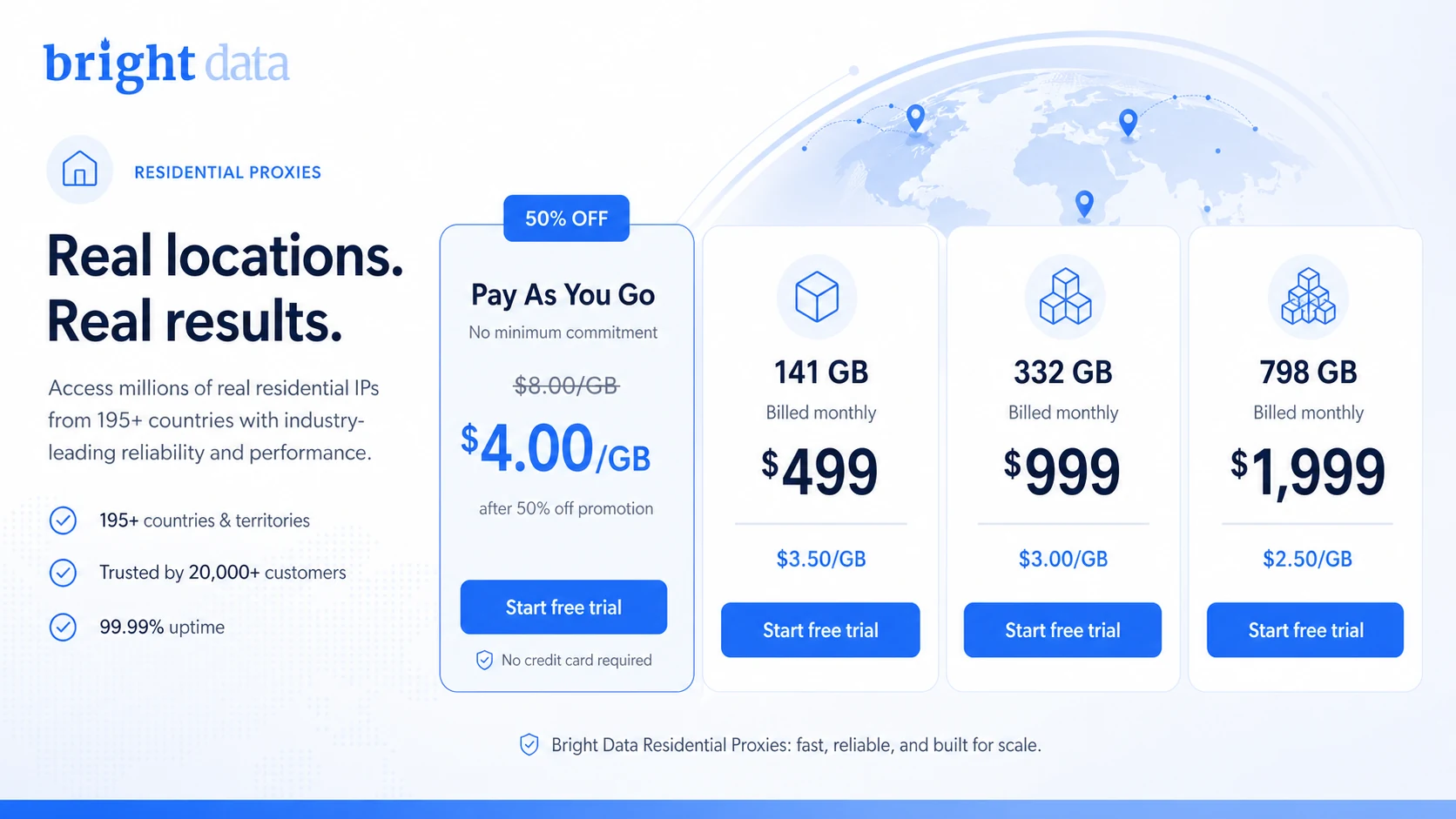
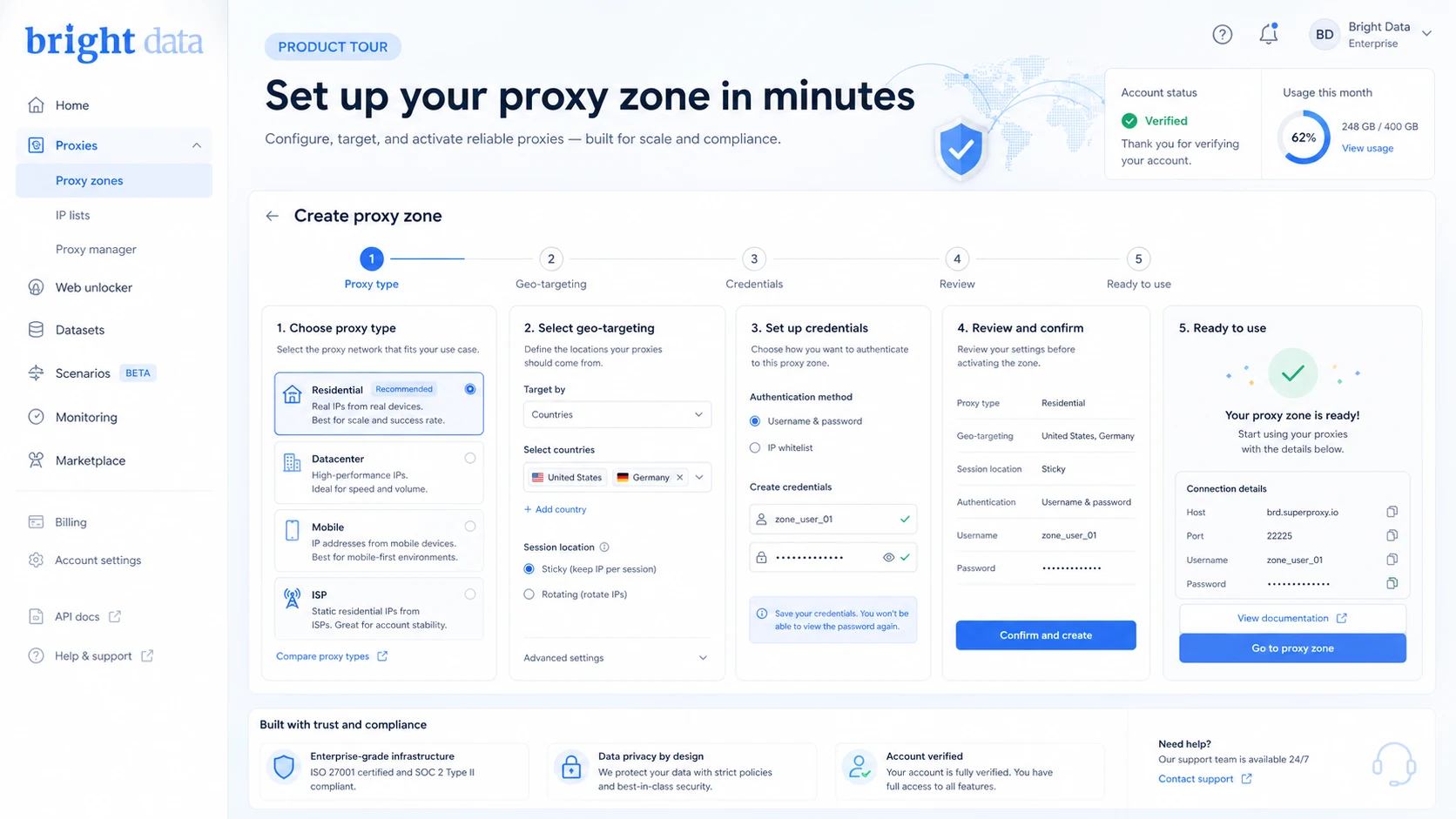
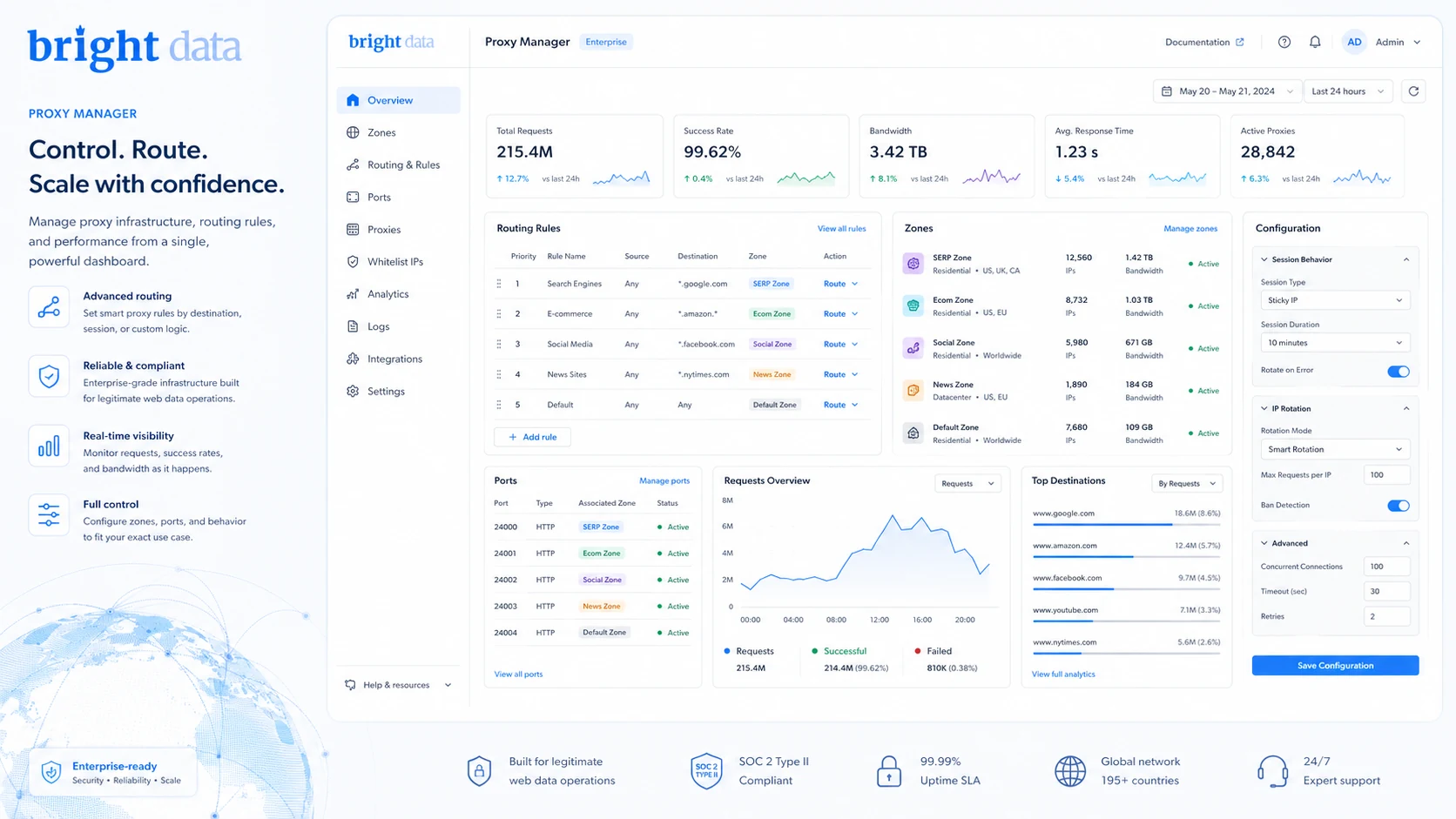
Bright Data is the current platform behind the old Luminati Proxy name. For a buyer, the important question is not whether it has a large proxy network. It does. The harder question is whether your team has the workload, technical setup, and compliance discipline to make enterprise-grade proxy infrastructure worth the spend.
What Luminati Proxy means today
Luminati Proxy now points buyers toward Bright Data. The company says it grew from proxy infrastructure into a broader web data platform, which means the current buying decision is wider than a single proxy package. You are comparing proxy networks, scraping APIs, Browser API, SERP API, datasets, compliance controls, and support depth under one Bright Data umbrella.
- Use current Bright Data pages for pricing and policy, not old Luminati references.
- Treat the product as proxy and web data infrastructure.
- Choose the specific product path before comparing price.
Who should seriously consider it
Bright Data makes the most sense when proxy reliability has direct business value. Data teams collecting public web data, SEO teams checking geo-specific results, market intelligence teams monitoring competitors, and developers building scraping pipelines can justify a deeper proxy platform. A solo buyer who only needs a small proxy list may find the setup and pricing model heavier than necessary.
- Good fit for structured data collection and market intelligence workflows.
- Better for technical teams than casual proxy shoppers.
- Most useful when geo-targeting, routing, success rate, and support matter.
Pricing is a proxy-type decision
The pricing page separates proxy types and related data products. Residential traffic is usually discussed as bandwidth pricing, datacenter proxies are advertised from an IP-based entry point, and scraping APIs follow their own usage logic. That means the buyer should not ask only how much Luminati Proxy costs. The better question is which Bright Data product should handle the workload and how the expected usage turns into monthly spend.
- Residential proxies suit harder targets and geo-sensitive access, but bandwidth cost matters.
- Datacenter proxies can be cheaper and faster for simpler websites.
- Browser API, SERP API, or Web Unlocker may be safer than raw proxy zones for some targets.
Setup and developer workflow
Bright Data's docs show a structured setup path: create a proxy zone, verify the account, get credentials, and configure traffic through the dashboard or tools such as Proxy Manager. Technical teams may like that level of control. Less technical buyers should treat it as a signal that this is infrastructure, not a plug-and-play browser extension purchase.
- Residential setup starts with account and proxy zone creation.
- Payment verification may be required before a proxy can be created.
- Proxy Manager supports cloud and local workflows, but it adds technical choices.
Compliance matters more than usual here
Proxy tools carry more policy risk than most SaaS products. Bright Data publishes acceptable-use rules and blocks or restricts certain activity categories. That matters for buyers doing SEO monitoring, ad verification, market research, or AI data pipelines because the same infrastructure that enables scale can also create legal or compliance issues if the workflow is careless.
- Review acceptable-use rules before testing real targets.
- Avoid fake engagement, spam, SEO manipulation, ticket bots, and nonpublic data collection.
- Confirm target-specific rules before sending production traffic.
Safest next step before checkout
The safest next step is to open the current Bright Data pricing page, choose the exact proxy or data product, and compare it against your estimated usage. Then read the license and acceptable-use pages before adding a payment method. If the workflow still feels unclear, read a full review or compare alternatives before chasing a promo code.
- Verify live pricing and promo terms.
- Estimate monthly usage before choosing pay-as-you-go or commitment.
- Check refund and cancellation language before recharge settings.
- Compare alternatives if your use case is small or less technical.
Best savings path from this store page
This is the clearest savings route to check once the product already looks like a fit.
Bright Data publishes a residential proxy coupon path for buyers testing its residential network. Use it as an official coupon route and still confirm that the discounted rate appears in the billing area.
Start a proxy trial
No monthly commitment path
Use comparison routes when the category fit is still open
Use these comparison routes when the product still looks plausible, but the category fit is not fully settled.
Often worth comparing when you want enterprise proxy infrastructure with a strong compliance and data-gathering focus.
Usually a better next tab when you want a simpler proxy buying experience and smaller team fit.
Useful to compare if your priority is lower-cost datacenter or static proxy buying rather than broad infrastructure.
A cleaner fit when you prefer a scraping API abstraction instead of managing proxy zones directly.
Verification points worth checking before you click out
Where this store usually fits best in the workflow
Teams can use proxy and web data infrastructure to collect public pricing, product, review, and availability signals across regions. The buyer still needs to confirm target rules and product choice before scaling.
Bright Data can support search-related workflows, but buyers should verify whether SERP API is required instead of a normal proxy network for search engine targets.
Developers building repeatable scraping or enrichment pipelines may value Proxy Manager, APIs, credentials, and managed routing more than a simple proxy list.
Proxy locations and targeting can help teams check public pages from different regions, but acceptable-use rules and target restrictions still matter.
Practical checkpoints before and after signup
- Map your target websites, expected bandwidth, target countries, and data use case.
- Confirm the use case is allowed under Bright Data's acceptable-use policy.
- Create a small proxy zone first and test real requests before making larger commitments.
- Check whether payment verification, credentials, API access, or Proxy Manager setup creates friction for your team.
- Compare pay-as-you-go against commitment pricing and deposit-match terms.
- Read the non-refundable fee language before enabling recharge or committing to volume.
- Monitor usage, failed requests, bandwidth burn, and target-specific errors.
- Revisit product choice if Browser API, Web Unlocker, or SERP API would reduce maintenance compared with raw proxies.
Fast-read signals for workflow fit and buying friction
Questions readers usually ask before choosing this store
Is Luminati Proxy still the current product name?
Not really. Luminati Networks is now Bright Data. Buyers should use current Bright Data product pages, docs, pricing, and policy pages when evaluating the proxy network and related web data products.
What does Bright Data's former Luminati proxy product actually do?
It provides proxy and web data infrastructure for public web data workflows. Depending on the product path, buyers can use residential, datacenter, ISP, or mobile proxies, plus related scraping APIs and browser infrastructure.
Is there a free plan or free trial?
Bright Data presents start-free and free-trial paths in public materials, and the docs mention payment verification and a small credit path for residential proxy setup. Buyers should verify current trial terms, identity verification, and any payment requirement inside the live dashboard.
Are there public coupons for Luminati Proxy or Bright Data?
Bright Data pricing pages may show public promotional pricing, coupon-code messaging, or first-deposit match offers. These should be checked live because proxy promotions can change by product, account status, and checkout timing.
What should buyers verify before checkout?
Verify the exact proxy type, expected bandwidth, target restrictions, acceptable-use policy, recharge settings, non-refundable fee language, and whether a managed product such as SERP API, Browser API, or Web Unlocker fits better than raw proxies.
Choose the next route that matches what you still need to decide
The strongest next click depends on whether you still need product judgment, a savings route, or a broader category comparison.