
Originality.ai Pricing, Plans & Publisher Fit
Originality.ai is a content quality platform built around AI detection, plagiarism checking, readability, grammar and spelling checks, fact-checking support, SEO optimization, team review workflows, WordPress scanning, Chrome and Google Docs support, and API access. It fits buyers who need repeatable editorial checks more than casual one-off AI detection.

Fit → price → checkout
Use these routes after the official-site check: coupon first, review for fit, compare if unsure.
Originality.ai pricing snapshot
Fast commercial checks before pricing, coupons, or a deeper review.
Originality.ai product tour
The product tour should help buyers see Originality.ai as a credit-based editorial quality workflow, not just a single AI percentage checker. The most important visuals are the scan result workflow, pricing and credit logic, Chrome or Google Docs review path, and WordPress or publisher workflow.
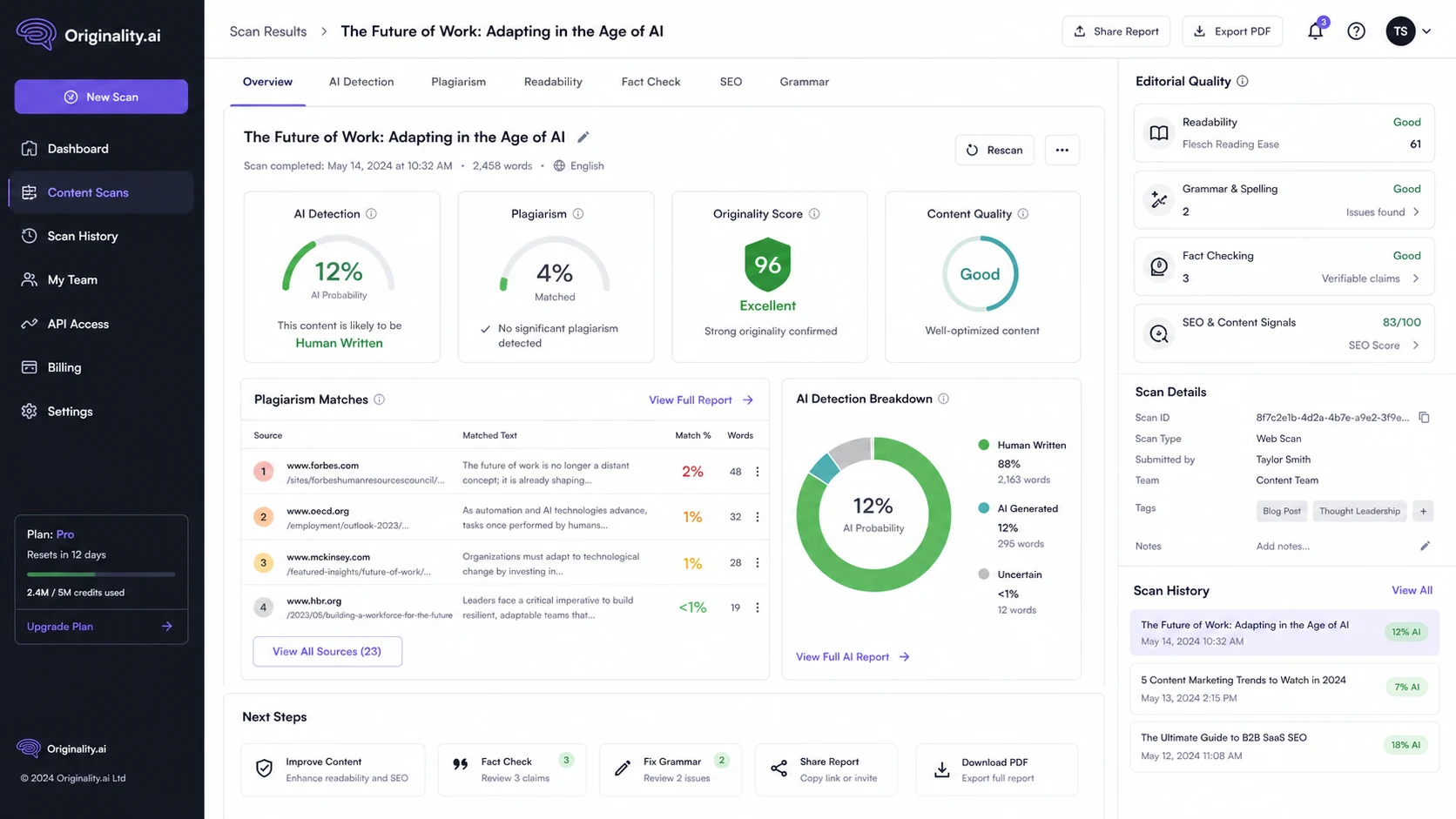
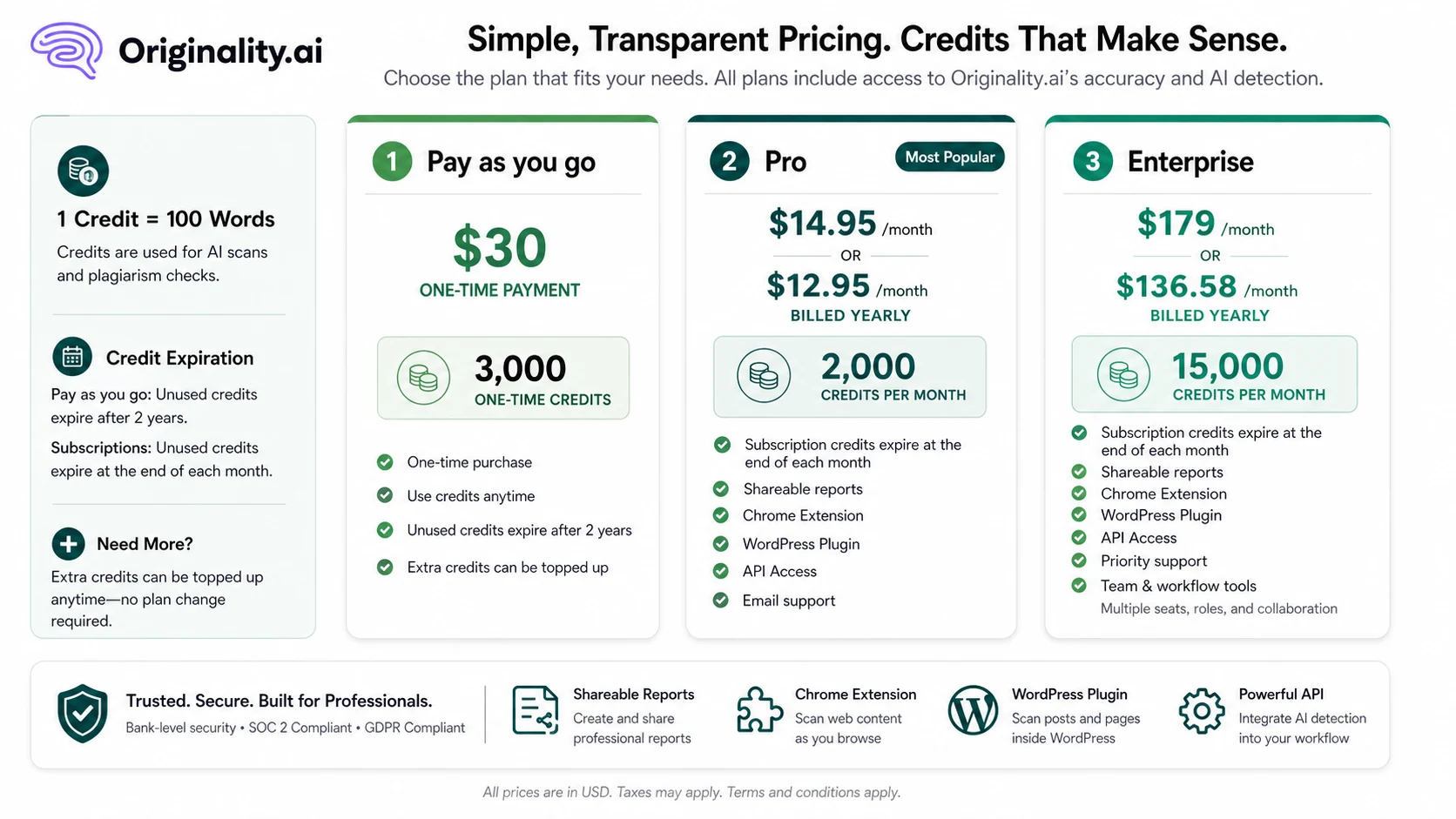
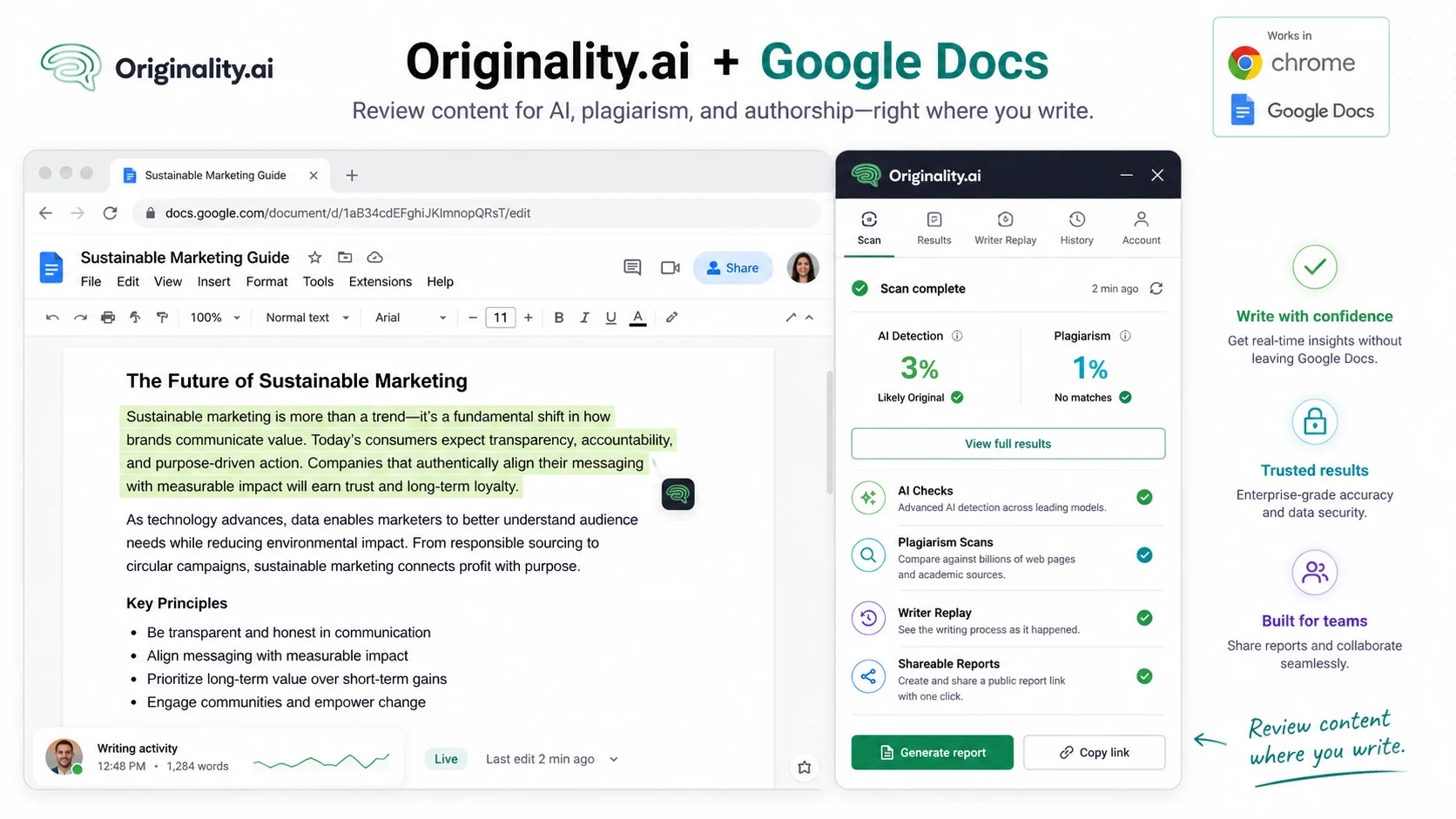
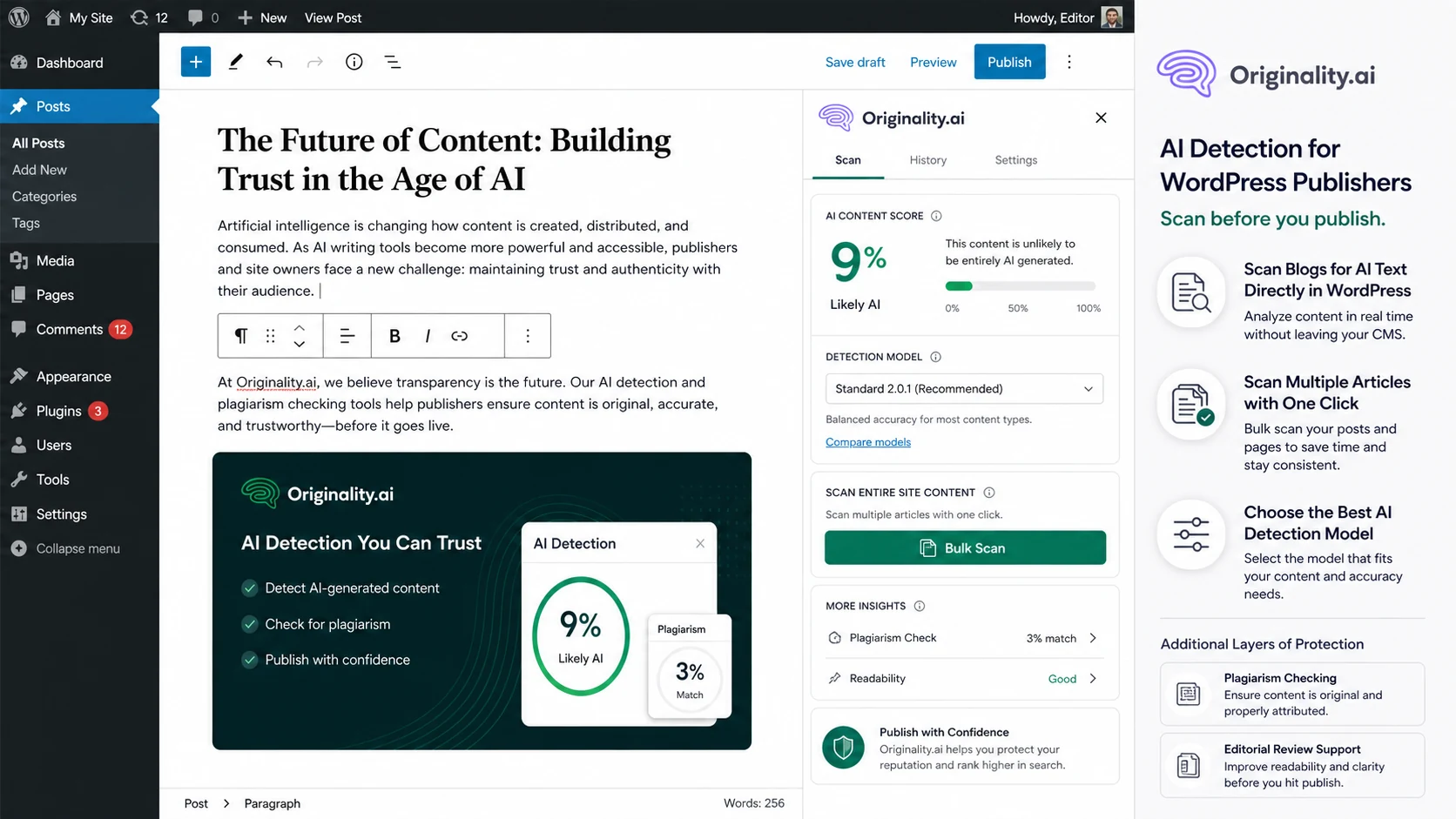
Originality.ai is best treated as a publisher and editorial quality workflow, not a casual AI detector. A buyer may arrive looking for a simple AI score, but the real decision is broader: credits, scan history, plagiarism checks, Chrome and Google Docs use, WordPress publishing, API access, team workflow, and whether annual billing fits real volume.
What Originality.ai actually does
Originality.ai helps buyers check text for AI writing, plagiarism risk, readability, grammar and spelling issues, factual risk, and SEO quality signals. The product is strongest when those checks become part of a repeatable editorial process, especially for publishers, agencies, schools, and teams that review content before it goes live.
- Run AI detection and plagiarism checks on drafts, pages, or uploaded files.
- Use readability, grammar, fact-checking, and SEO tools as extra editorial quality layers.
- Move checks into Chrome, Google Docs, WordPress, Moodle, or API workflows when copy-paste scanning is not enough.
Pricing and credit model
The pricing decision is mostly about credit usage. Pay as you go gives buyers a one-time credit bundle with a longer expiry window. Pro is better when checks happen every month and the buyer needs more workflow features. Enterprise is for agencies, publishers, and teams that need higher volume, longer history, API access, or priority support.
- Use Pay as you go when usage is uncertain or occasional.
- Use Pro when monthly scans are predictable and workflow features matter.
- Use Enterprise only when volume, support, API, history, or team needs justify the higher price.
Watch the Chrome and Google Docs workflow
The body video is useful because it shows Originality.ai closer to where people actually write and review documents. Buyers should look for whether the Chrome extension, Google Docs workflow, writer replay, web page scan, and shareable report features solve a real process problem before upgrading.
- Check whether scanning inside Google Docs saves enough time to matter.
- Look at writer replay if authorship transparency is part of the workflow.
- Verify whether Chrome extension use is enough or whether the team also needs WordPress or API access.
Publisher, WordPress, team, and API fit
Originality.ai becomes more interesting when the buyer is responsible for a repeatable publishing workflow. WordPress support helps site owners scan posts close to publication. Team management and scan tagging help agencies organize reviews. API access fits products, CMS workflows, or internal tools that need AI and plagiarism checks inside another system.
- WordPress users should verify plugin setup and credit usage before rolling it across a site.
- Agencies should check team roles, tagging, report sharing, and scan history requirements.
- Developers should review API documentation and expected volume before choosing the plan.
What to verify before checkout
The biggest buying risk is choosing a plan before understanding credit expiry, scan volume, feature access, renewal behavior, and refund flexibility. Originality.ai's published refund policy is discretionary, so buyers should not treat checkout as a no-risk trial unless the live terms clearly say so.
- Confirm the final monthly or annual price on the live checkout screen.
- Verify credit count, credit expiry, and top-up options before paying.
- Check whether the plan includes Chrome, WordPress, API, team, and scan-history features you need.
- Read the refund policy before assuming a refund will be automatic.
Best next step
If the buyer only wants a quick AI check, compare Originality.ai with GPTZero and Copyleaks before paying. If the buyer runs a content operation, start with the pricing page, estimate monthly credit usage, and read the full Originality.ai review before choosing Pay as you go, Pro, or Enterprise. If a deal matters, use the coupon route after the workflow already makes sense.
- Use the review path when fit, accuracy expectations, or workflow role is still unclear.
- Use the pricing path when the main question is credits, billing, or annual savings.
- Use the coupon path only after Originality.ai is already the right product fit.
- Compare Copyleaks, GPTZero, and Winston AI if the buyer is still choosing the detector category.
Best savings path from this store page
This is the clearest savings route to check once the product already looks like a fit.
A third-party coupon source reports a checkout code for credit purchases. Treat this as a checkout-test path because the official pricing page does not publish this coupon directly.
The official pricing and pay-as-you-go paths should remain the fallback if this reported coupon does not validate.
Save $24 yearly
$30 one-time credits
Use comparison routes when the category fit is still open
Use these comparison routes when the product still looks plausible, but the category fit is not fully settled.
Copyleaks is the stronger comparison when the buyer wants education, LMS, governance, or plagiarism workflows with a broader enterprise compliance angle.
GPTZero is usually easier to test first because it has a more visible free-entry path and is often considered by teachers, students, and writers before teams upgrade.
Winston AI may fit buyers who want a simpler detector and report workflow without Originality.ai's publisher, WordPress, API, and credit-model complexity.
AI Detector Pro is worth checking when the buyer wants a focused AI detection workflow and does not need the same publishing or team depth.
Verification points worth checking before you click out
Where this store usually fits best in the workflow
Originality.ai fits publishers that need a repeatable checkpoint before content goes live. The buyer should compare credits, WordPress workflow, scan history, plagiarism checks, and report sharing before choosing Pro or Enterprise.
Agencies can use Originality.ai to review outsourced drafts, tag scans, share reports, and apply consistent checks across clients. The plan should be chosen based on monthly word volume and team workflow, not only the lowest monthly price.
WordPress users can move AI detection closer to the publishing process. This is useful when editors need to check existing posts or new drafts without leaving the CMS, but buyers should verify plugin setup and credit use first.
API access fits products, CMS tools, or internal systems that need AI and plagiarism checks embedded inside another workflow. Buyers should review the API docs and expected credit volume separately from normal dashboard pricing.
Practical checkpoints before and after signup
- Clarify whether the buyer needs casual AI detection, editorial QA, plagiarism checks, WordPress scanning, team workflow, or API access.
- Compare Originality.ai with Copyleaks and GPTZero before assuming one detector fits every use case.
- Estimate monthly words scanned and convert that into credit usage before choosing Pro or Enterprise.
- Use a smaller first purchase when scan volume is uncertain.
- Open the live pricing page and compare Pay as you go, Pro monthly, Pro annual, Enterprise monthly, and Enterprise annual.
- Check credit expiry and refund policy before committing to annual billing.
- Start with the narrowest workflow that proves value before expanding seats, annual billing, or API usage.
- For WordPress or API use, test setup requirements before treating Originality.ai as a simple dashboard purchase.
Fast-read signals for workflow fit and buying friction
Questions readers usually ask before choosing this store
What is Originality.ai best for?
Originality.ai is best for publishers, agencies, SEO teams, schools, and content teams that need repeatable AI detection and plagiarism checks before publishing or accepting content. It is more useful as an editorial workflow tool than as a casual one-time detector.
Does Originality.ai have a free plan?
Originality.ai does not position the main paid platform around a permanent free plan. The clearer public entry points are Pay as you go credits, Pro subscription, and Enterprise subscription. Buyers should verify any temporary trial or promotional path directly on the live site before relying on it.
How does Originality.ai pricing work?
Pricing is credit based. Pay as you go costs $30 for 3,000 one-time credits. Pro starts at $14.95 per month, or $12.95 per month when billed yearly. Enterprise starts at $179 per month, or $136.58 per month when billed yearly. One credit equals 100 words.
Are Originality.ai coupon codes the best savings path?
Usually no. The safer savings path is to compare pay-as-you-go credits, Pro annual billing, Enterprise annual billing, and any verified DealBestDaily route. Public coupon claims should be treated as unverified unless they work on the live checkout page.
What should buyers verify before paying for Originality.ai?
Buyers should verify final checkout price, billing interval, credit count, credit expiry, top-up options, refund policy, Chrome or Google Docs access, WordPress plugin needs, team support, API requirements, and whether the plan matches expected monthly scan volume.
Choose the next route that matches what you still need to decide
The strongest next click depends on whether you still need product judgment, a savings route, or a broader category comparison.