
Winston AI Pricing, Plans & Detector Fit
Winston AI is an originality-checking platform built around AI text detection, plagiarism checking, AI image detection, writing feedback, reports, and team workflows. It is strongest when the buyer needs more than a one-off AI percentage and wants a repeatable review process for education, SEO, publishing, or content operations. The commercial decision is mostly about credits, billing interval, and whether the buyer needs plagiarism, image forensics, team members, or API access.
Fit → price → checkout
Use these routes after the official-site check: coupon first, review for fit, compare if unsure.
Winston AI pricing snapshot
Fast commercial checks before pricing, coupons, or a deeper review.
Winston AI product tour
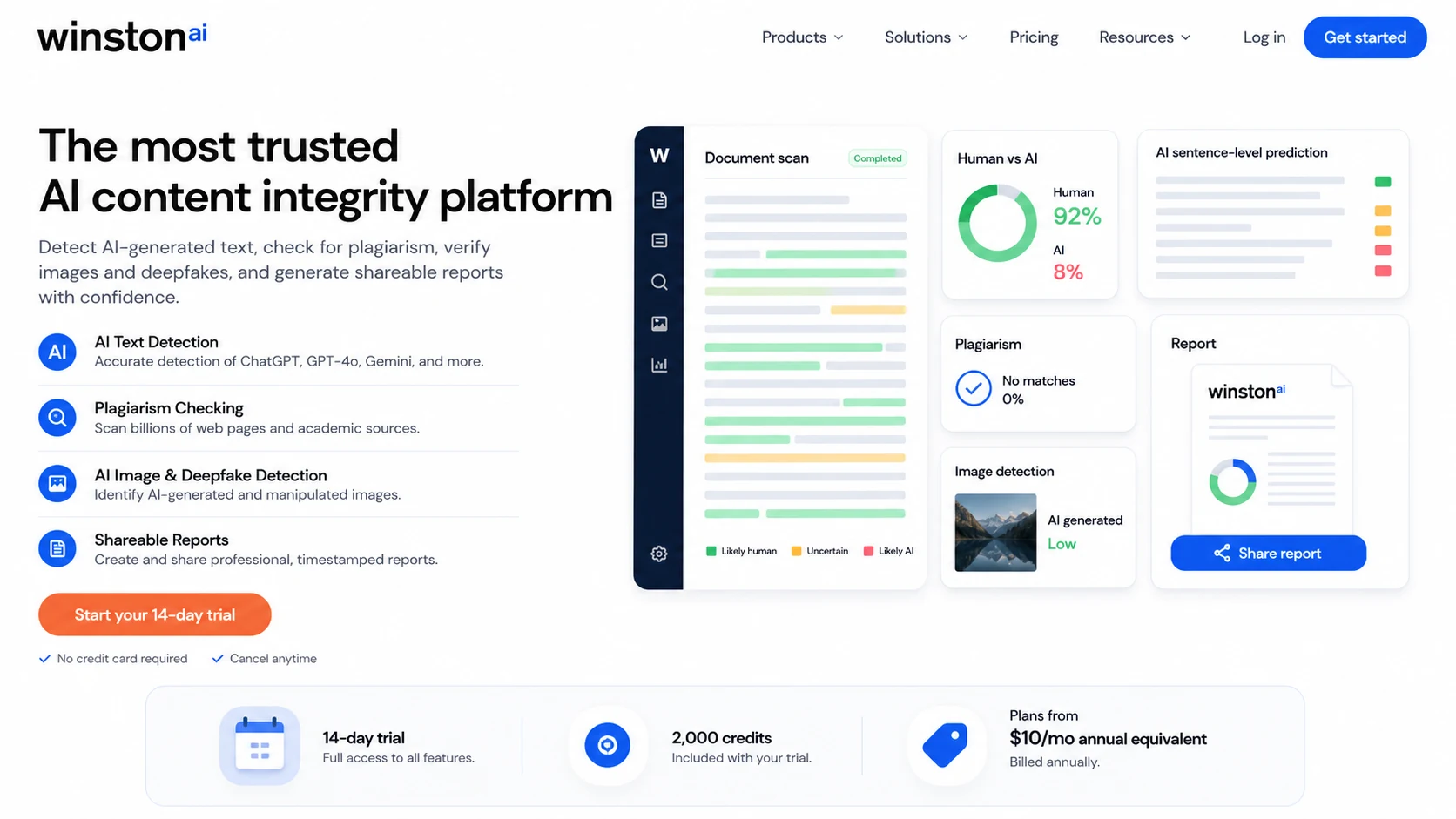
This product tour focuses on the practical buying decision: how Winston AI scans text, where plagiarism and image checks fit, how reports support review workflows, and why credits matter before choosing a paid plan. The video and screenshots are meant to help buyers judge whether Winston AI feels like a repeatable integrity workflow or just a one-off detector.
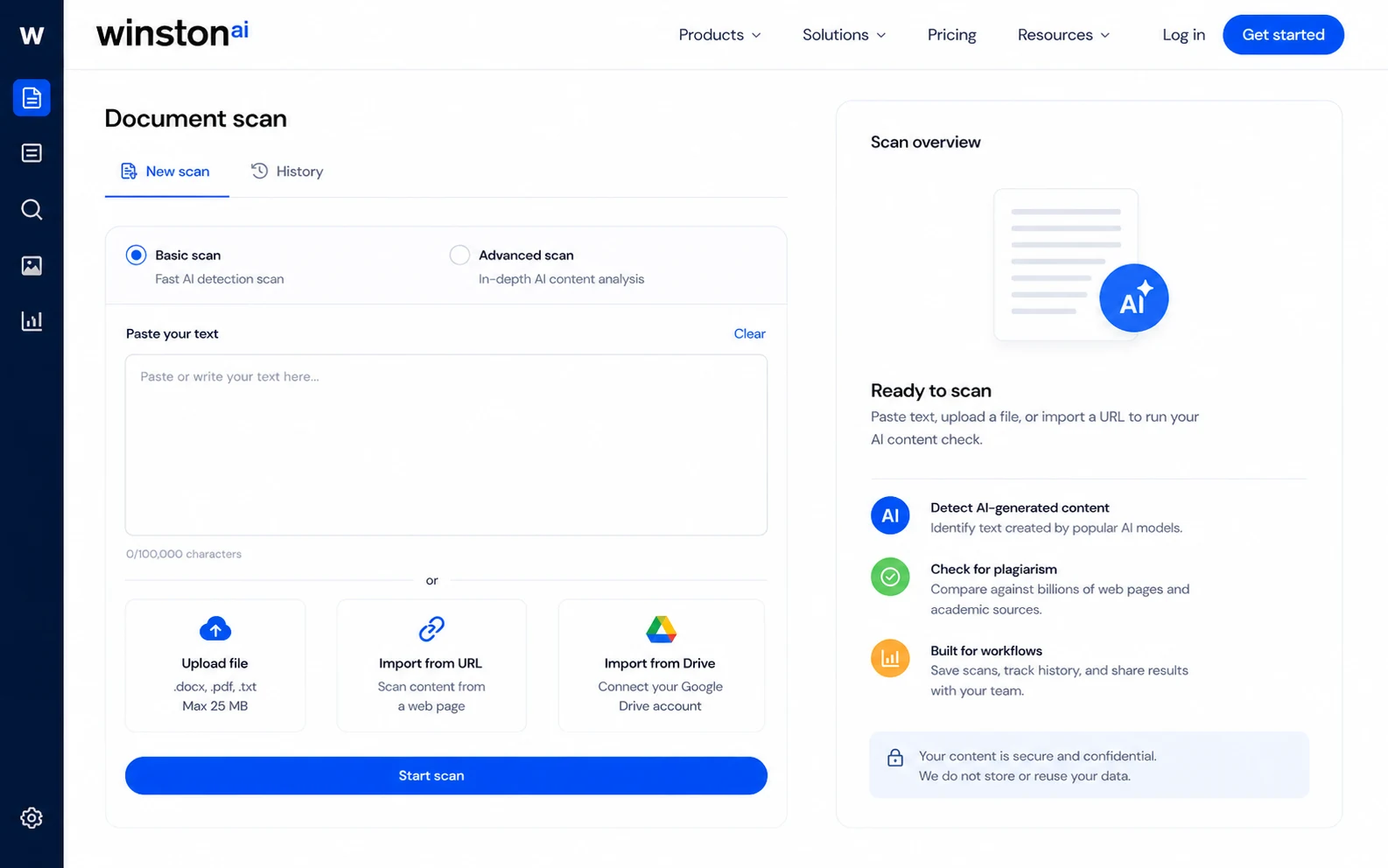
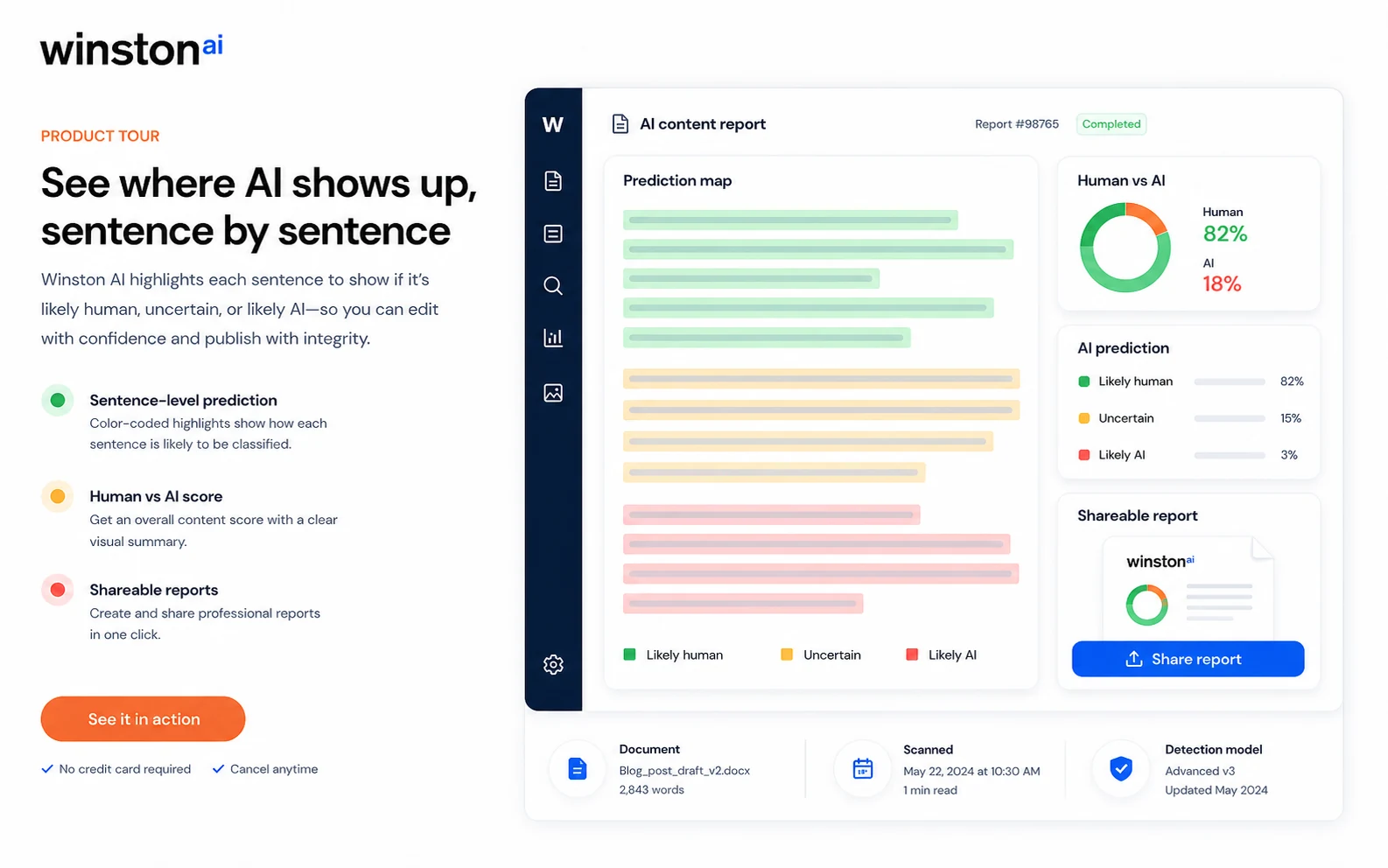
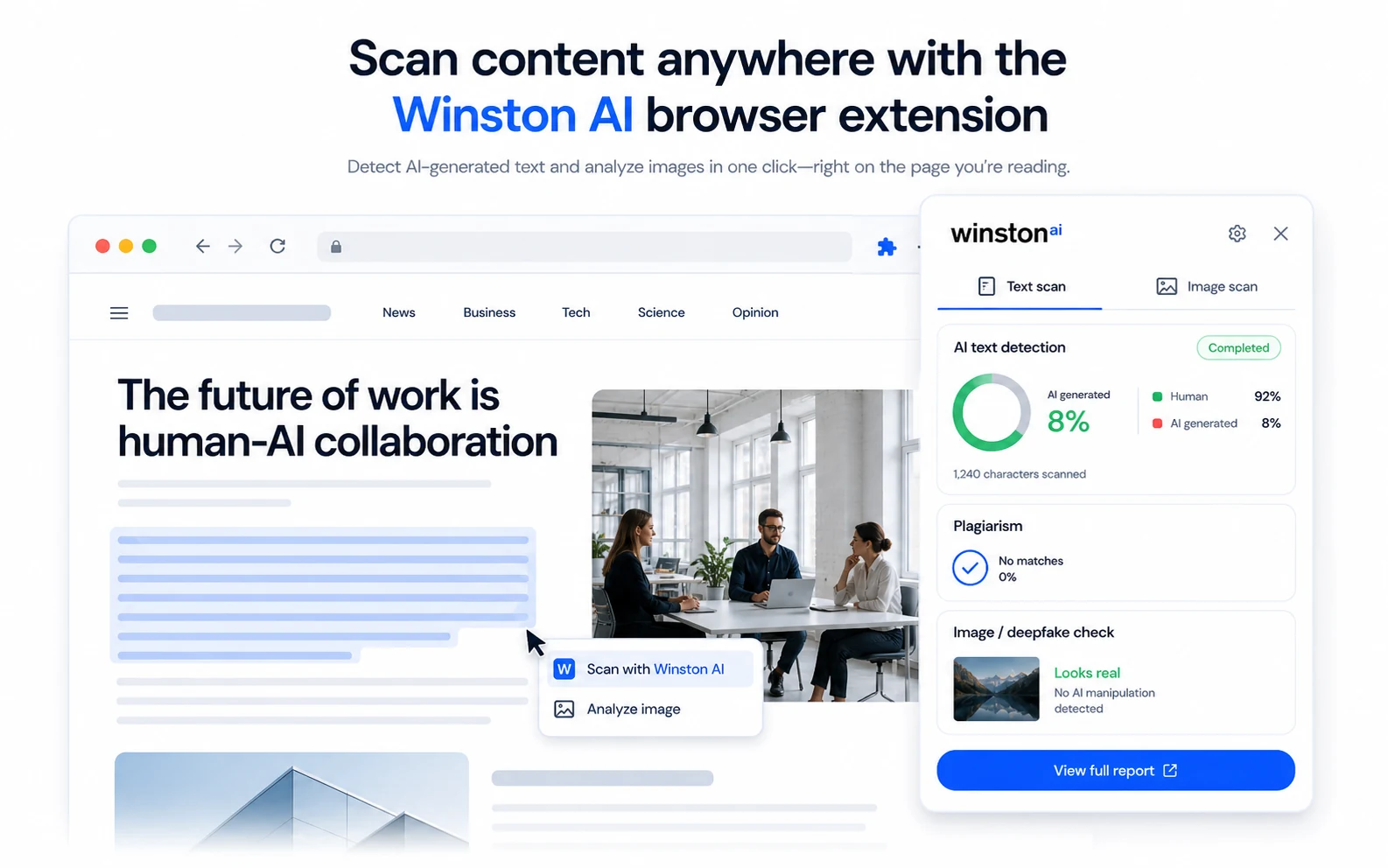
Winston AI is not just a simple text box that says human or AI. Its store-page value comes from the wider workflow: AI text detection, plagiarism checking, image and deepfake detection, OCR, writing feedback, reports, team members, browser scanning, and API routes. That breadth is useful, but it also means buyers need to understand credits and plan fit before treating the lowest monthly number as the whole story.
What Winston AI actually does
Winston AI checks text for AI-generation signals, supports plagiarism checking, scans images for AI or deepfake indicators, and produces reports that can be shared or saved. The homepage positions it for educators, SEO teams, writers, publishers, and institutions that need a repeatable originality workflow. The main fit question is whether the buyer needs a serious review process or only a quick one-time detector.
- Use AI text detection when authorship risk matters.
- Use plagiarism checking when source overlap must be reviewed.
- Use image detection when visual authenticity is part of the risk.
Pricing and credits are the real buying question
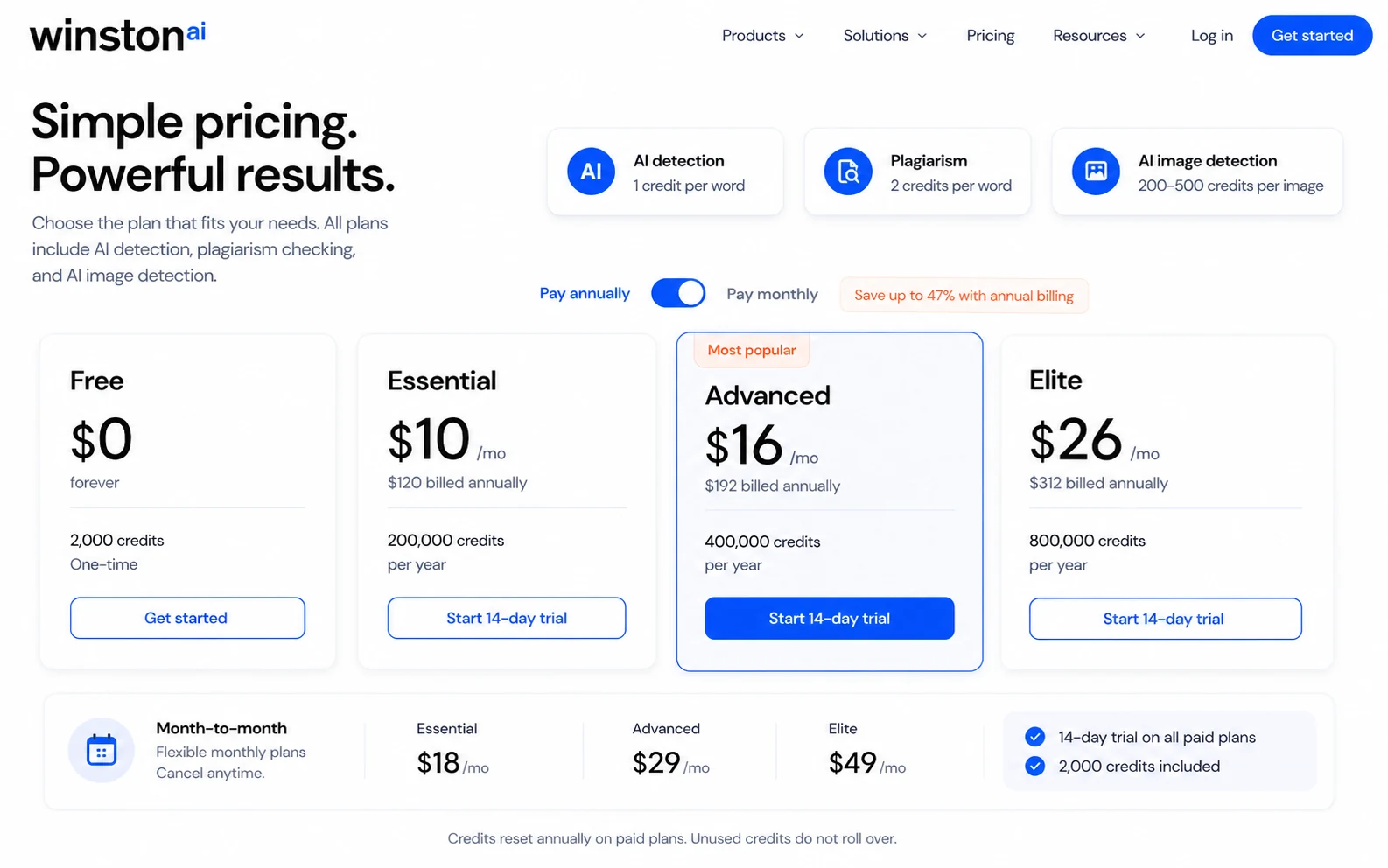
The pricing page is built around credits, not just plan names. AI detection is listed at 1 credit per word, plagiarism checking at 2 credits per word, and AI image detection at a much higher credit cost per image. That means a buyer who mostly checks short text has a very different cost profile from a buyer who scans long documents, plagiarism reports, OCR images, or team workloads.
- Essential is the entry paid tier after the trial.
- Advanced adds stronger plagiarism and team capacity signals.
- Elite is better aligned with large volume and unlimited team member needs.
Where the free trial helps
Winston AI offers a 14-day trial with 2,000 credits and no credit card required. That is enough to test the interface, scan short samples, and see whether the report output feels useful. It is not enough to prove long-term value for a school, agency, or publisher with high-volume monthly scanning. Treat the trial as a fit test, not a full production proof.
- Test the report quality with real examples.
- Check how quickly credits move with your document length.
- Compare AI-only scans with plagiarism and image checks.
Video guide for plagiarism-heavy workflows
The second video is useful when the buyer is not just checking whether text looks AI-generated, but also wants to monitor originality and plagiarism risk. It gives a better sense of how Winston AI can fit education, publishing, or brand-content workflows where a simple AI score would be too shallow.
Integrations, API, and team use
Winston AI is more appealing for repeat workflows because it has browser extension support, Google Classroom and Zapier references, API paths, and team features. The pricing page also references team members, shared billing, credit pooling, browser scanning, and API access. Buyers should still verify the exact plan tier because integration access and team capacity can vary by plan.
- Chrome, Firefox, and Edge support can reduce copy-paste scanning.
- Google Classroom and Zapier paths matter for education and operations teams.
- API access is useful only if the buyer has a real integration workflow.
Safest next step before checkout
The safest path is simple: start with the free trial, scan real samples, measure credit usage, then compare monthly versus annual billing. Move to the full review if the workflow still feels unclear. Move to the coupon or pricing path only after the plan tier makes sense. This keeps the store page doing its job as a buying router instead of forcing the reader straight into checkout.
- Use trial credits on realistic samples.
- Compare plan tiers by credit usage, not only by price.
- Read the non-refundable terms before upgrading.
Best savings path from this store page
This is the clearest savings route to check once the product already looks like a fit.
A partner coupon source reports a checkout code for Winston AI. Treat it as a testable coupon path rather than an official pricing-page discount.
The official pricing page should remain the fallback because coupon availability can change quickly.
30% off monthly or annual plans for 1 year via partner deal
Custom plans for larger organizations
Use comparison routes when the category fit is still open
Use these comparison routes when the product still looks plausible, but the category fit is not fully settled.
Originality.ai may be a stronger comparison when the buyer cares most about publisher-style content workflows, credit-based scanning, and team editorial review. Winston AI deserves the closer look when image detection, classroom-style use, and shareable reports are central.
Copyleaks is often the more enterprise and institutional comparison, especially for LMS and API-driven plagiarism workflows. Winston AI may feel more approachable for buyers who want detector, plagiarism, image, and browser checks in one visible product path.
GPTZero is a natural comparison for education-focused AI detection and writing analysis. Winston AI becomes more attractive when the buyer also wants plagiarism checking, AI image detection, and broader integrity reports.
Verification points worth checking before you click out
Where this store usually fits best in the workflow
Winston AI fits educators who need to review student submissions for AI and plagiarism signals, generate shareable reports, and keep the process repeatable instead of relying on a one-off free checker.
Content teams can use Winston AI before publishing to check whether drafts may look synthetic, whether plagiarism risk is present, and whether a report is useful for editor or client communication.
Buyers who review visual assets can use Winston AI's AI image detection path as part of a broader authenticity workflow, especially when text detection alone is not enough.
Developers and operations teams can evaluate Winston AI when they need AI detection or plagiarism checking inside another product, dashboard, or repeatable automation.
Practical checkpoints before and after signup
- Confirm whether your real need is AI text detection, plagiarism checking, image detection, or all three.
- Compare Winston AI against Originality.ai, Copyleaks, and GPTZero before judging price.
- Use official pricing and terms pages rather than third-party coupon claims.
- Use the 14-day trial on real documents instead of short artificial samples.
- Track how credits are consumed by text length, plagiarism checks, and image scans.
- Check whether reports are clear enough to share with students, clients, or editors.
- Compare annual and monthly billing before upgrading.
- Read cancellation and non-refundable purchase language before paying.
- Confirm team seats, API access, and integrations on the exact plan tier.
- Start with a narrow repeatable workflow such as student essays, blog drafts, or client deliverables.
- Set internal rules for how AI detection results should be interpreted.
- Recheck credit usage before renewal or team expansion.
Fast-read signals for workflow fit and buying friction
Questions readers usually ask before choosing this store
What is Winston AI best for?
Winston AI is best for buyers who need a repeatable originality workflow that can include AI text detection, plagiarism checking, AI image detection, reports, team members, and integrations. It is stronger for education, publishing, SEO review, and institutional workflows than for one casual scan.
Does Winston AI have a free plan?
Winston AI has a free 14-day trial with 2,000 credits and no credit card required. It should not be treated like a permanent unlimited free plan. Use the trial to test real documents and understand credit usage before upgrading.
How does Winston AI pricing work?
Pricing is based on paid plans and credits. The pricing page lists annual-equivalent prices from $10 per month for Essential, while month-to-month billing starts higher. AI detection, plagiarism checking, and image detection consume credits differently, so the right plan depends on workload.
Are Winston AI purchases refundable?
Winston AI's terms state that all purchases are non-refundable, subject to mandatory consumer protection rights in the buyer's jurisdiction. Buyers can cancel a subscription, but cancellation takes effect at the end of the current paid term.
What is the safest next step before buying Winston AI?
Start with the free trial, test real documents, check how quickly credits are used, and compare monthly versus annual billing. If product fit is still unclear, read the review first. If the fit is clear, move to the pricing or coupon path to verify the latest offer.
Choose the next route that matches what you still need to decide
The strongest next click depends on whether you still need product judgment, a savings route, or a broader category comparison.